
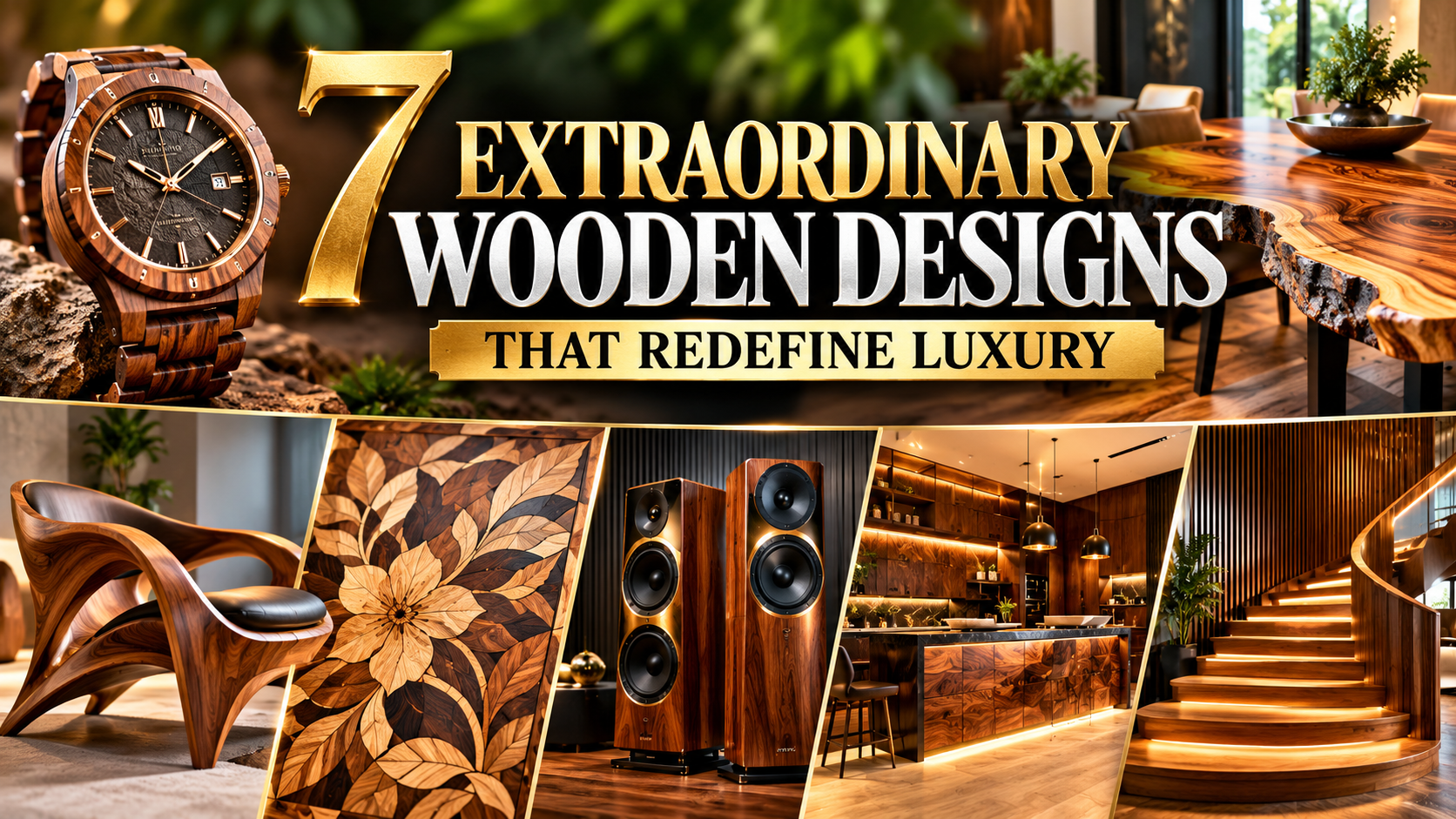
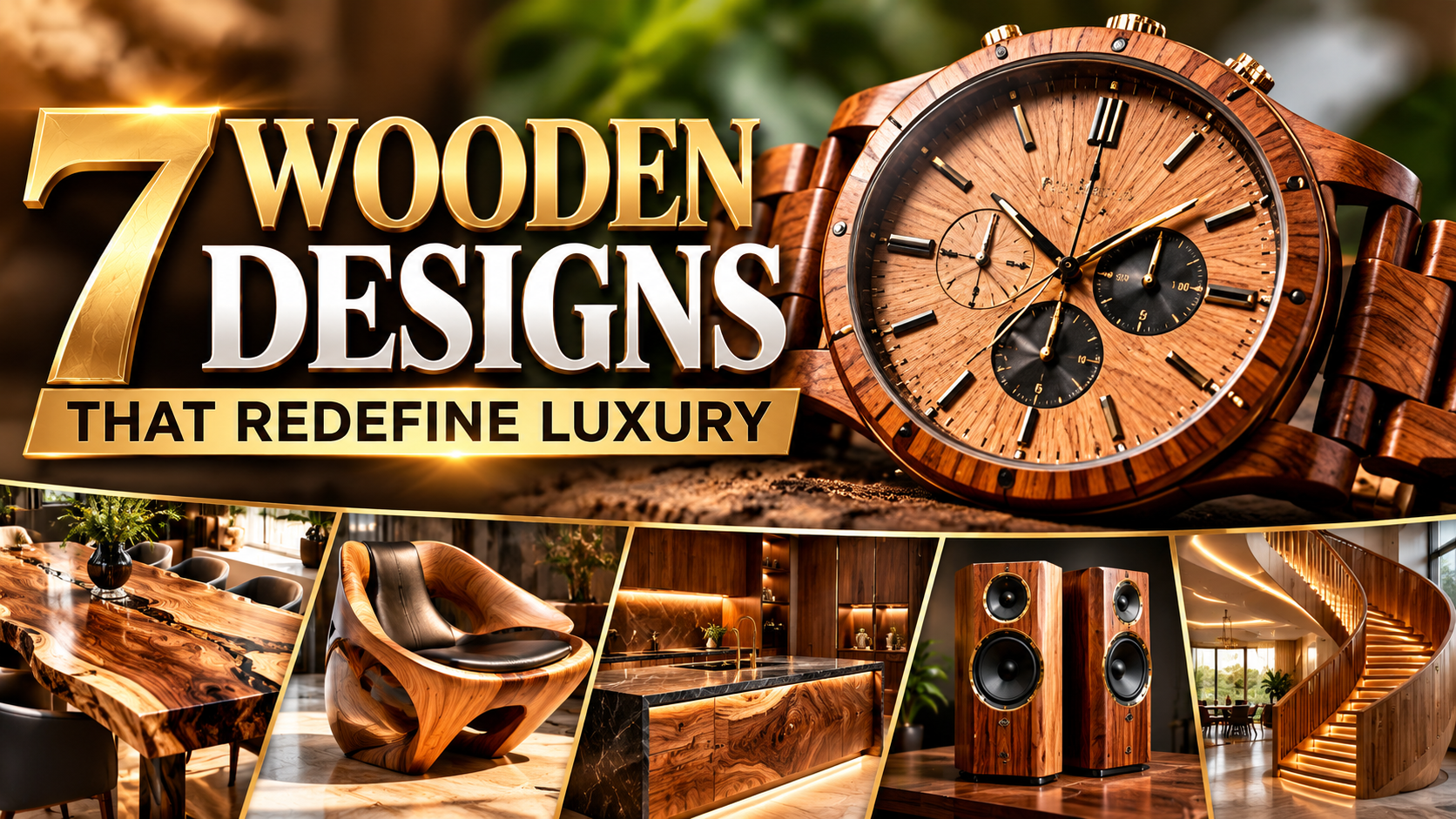
7 Extraordinary Wooden Designs That Redefine Luxury
Discover how luxury wooden watches, sculptural furniture, statement tables, intricate marquetry, premium speakers, elegant interiors, and precision engineering are transforming wood into extraordinary design.
Wood has been an essential material in furniture making, architecture, and decorative craftsmanship for centuries. Yet modern designers keep discovering new ways to transform this natural material into products that feel exclusive, sophisticated, and timeless.
Today, luxury wooden design extends far beyond traditional cabinets, dining tables, and chairs. Wood appears in carefully crafted wristwatches, sculptural furniture, high-end audio equipment, artistic wall panels, and architectural interiors that combine natural beauty with advanced engineering.
What makes these designs special is not simply the material itself. It is the combination of thoughtful design, skilled craftsmanship, attention to detail, and the ability to turn a natural resource into something distinctive.
Here are seven extraordinary wooden designs that demonstrate how wood continues to redefine luxury.
1. Luxury Wooden Watches: Where Nature Meets Precision
Luxury watches are often associated with stainless steel, gold, titanium, and other premium materials. However, wooden watches offer a different kind of sophistication by introducing natural grain patterns, warm colors, and a distinctive organic character.
Each piece of wood has its own visual features. Grain, color variations, and texture can make one wooden watch look noticeably different from another, giving each finished product a unique appearance.
Modern wooden watches may feature wooden cases, bezels, dials, or bracelets. Some designs combine wood with metal components, mineral or sapphire crystal, and precision-engineered movements to balance appearance with practical performance.
Design inspiration also comes from Scandinavian minimalism, where clean lines, simplicity, and functional details play an important role.
The challenge is engineering wood into components that must fit accurately and withstand everyday use. Moisture, temperature changes, friction, and repeated movement all require consideration during product development.
For consumers seeking an alternative to conventional luxury accessories, a well-designed wooden watch offers a distinctive blend of natural character and contemporary style.
What makes it luxurious? The appeal lies in its unusual material, carefully selected wood, refined finishing, and the engineering required to turn a natural material into a functional timepiece.
2. Sculptural Wooden Furniture: Functional Art for Modern Homes
Furniture can do much more than provide a place to sit, work, or relax. In luxury interiors, it can become a central artistic feature that defines the character of an entire room.
Sculptural wooden furniture embraces this idea by combining practical function with expressive shapes, flowing curves, unusual proportions, and carefully considered construction.
A sculptural lounge chair, for example, might feature a curved wooden frame that follows the contours of the human body. A designer bench may use intersecting wooden forms to create a striking silhouette, while a statement side table can resemble a piece of contemporary sculpture.
Achieving these designs requires more than attractive materials. Designers and craftspeople must consider structural strength, balance, ergonomics, joinery, and the natural behavior of wood.
Some pieces are produced using traditional woodworking techniques, while others incorporate digital modeling, computer-controlled machining, or precision-cut components.
The most successful designs combine artistic expression with genuine usability. They attract attention without sacrificing comfort, stability, or purpose.
In a minimalist home, a single sculptural wooden chair or table can provide warmth and personality without overwhelming the surrounding space.
What makes it luxurious? Original form, refined proportions, excellent finishing, and the skill required to create a distinctive piece that remains functional.
3. Statement Wooden Tables: Celebrating Natural Grain and Character
A dining table or coffee table can become the visual centerpiece of a luxury living space. Unlike mass-produced furniture designed primarily for uniformity, statement wooden tables often emphasize the individual character of the material.
Live-edge tables are a popular example. They preserve the natural outline of a tree slab, allowing the irregular edge to become part of the design. The result can feel organic and dramatic, particularly when the table combines a distinctive slab with a restrained metal or wooden base.
Other designs emphasize carefully matched grain patterns, contrasting wood tones, geometric construction, or complex joinery.
Walnut is often selected for its rich brown color, while oak offers pronounced grain and a versatile appearance. Maple can provide a lighter, cleaner aesthetic. The final result depends on the species, the quality of the timber, and how the material is prepared and finished.
Some contemporary statement tables also combine wood with stone, glass, resin, or metal. These combinations introduce contrast while allowing the wood to remain a defining feature.
However, a beautiful slab alone does not guarantee a successful table. Proper drying, moisture control, structural support, and suitable finishing are essential to reduce the risk of warping, cracking, and other problems.
What makes it luxurious? Distinctive timber, balanced proportions, careful craftsmanship, and a design that allows natural wood character to take center stage.
4. Marquetry: Turning Wood into Intricate Art
Marquetry is a decorative woodworking technique in which small pieces of wood veneer are arranged to create images, patterns, geometric compositions, or detailed ornamental designs.
It demonstrates that wood can serve not only as a structural material but also as a medium for intricate visual expression.
Craftspeople may select veneers with contrasting colors and grain directions to produce repeating patterns, floral arrangements, abstract compositions, or images that resemble paintings.
Because different wood species have naturally varied tones and textures, skilled artisans can create visual depth without relying entirely on paint or printed decoration.
The process demands patience and precision. Each veneer piece must be selected, cut, positioned, and fitted carefully. Small inaccuracies can interrupt the overall pattern, particularly in highly detailed work.
Marquetry can be used on cabinet doors, tabletops, wall panels, decorative boxes, desk surfaces, and bespoke furniture. In luxury interiors, it can transform an otherwise simple surface into a carefully composed work of art.
Modern technology may assist with design planning and precision cutting, but the selection of materials, arrangement of patterns, and quality of the final finish remain important to the finished appearance.
What makes it luxurious? Intricate detail, carefully coordinated natural colors, demanding workmanship, and the artistic character of the completed surface.
5. High-End Wooden Speakers: Engineering Meets Craftsmanship
Premium audio equipment is often designed around technical performance, but its appearance can also influence how it fits into a carefully designed home.
Wooden speakers bring together audio engineering and interior design. Their cabinets can introduce warmth, texture, and visual sophistication into a living room, listening space, or home entertainment area.
Different cabinet materials have different acoustic and structural properties. Properly engineered speaker enclosures are designed to control unwanted vibrations and resonances while supporting the performance of the drivers and other components.
High-quality wooden speaker cabinets may use carefully constructed hardwood, engineered wood panels, veneers, or combinations of materials. The best choice depends on the design, intended acoustic behavior, manufacturing method, and budget.
Wood veneer can provide the appearance of premium timber while allowing manufacturers to use stable engineered substrates. Solid wood may also be incorporated where the design and engineering requirements make it appropriate.
Beyond the enclosure, a premium speaker may include carefully selected drivers, crossover components, internal bracing, and a finish that complements the surrounding furniture.
The important distinction is that attractive wood alone does not guarantee excellent sound. Acoustic design, component quality, cabinet construction, and testing all contribute to the final listening experience.
What makes it luxurious? The combination of refined cabinetry, high-quality components, considered proportions, and engineering that supports the intended audio performance.
6. Luxury Wooden Interiors: Creating Warmth Through Architectural Design
Wood can transform the atmosphere of an interior more dramatically than many decorative materials. Its colors, grain patterns, and textures introduce warmth while helping designers create spaces that feel cohesive and inviting.
Luxury wooden interiors may feature bespoke cabinetry, timber wall panels, decorative ceilings, custom shelving, carefully detailed doors, and statement staircases.
In contemporary homes, wood is often combined with stone, glass, metal, and carefully designed lighting. These contrasts can highlight the natural texture of timber while preventing the space from feeling visually monotonous.
A wall of walnut cabinetry, for instance, can provide a rich backdrop for a minimalist kitchen. Oak wall panels can introduce texture into a modern living room, while a sculptural wooden staircase can become an architectural focal point.
Successful wooden interiors require careful planning. Designers must consider the relationship between different timber finishes, the direction of the grain, the scale of each surface, and how natural and artificial light affect the appearance of the wood.
Technical considerations are equally important. Moisture control, ventilation, suitable installation methods, and appropriate finishes help ensure that wooden elements perform well over time.
Responsible material selection also matters. Specifying wood from credible, well-managed sources can help designers and homeowners make more informed decisions about environmental impact.
What makes it luxurious? Bespoke detailing, coordinated materials, thoughtful lighting, excellent installation, and a consistent design language throughout the space.
7. Wood and Precision Engineering: The Future of Luxury Design
One of the most interesting developments in contemporary woodworking is the combination of traditional craftsmanship with modern engineering.
Wood is a natural material, but it can be shaped, measured, and assembled with extraordinary precision. Advances in digital design, computer-controlled cutting, material testing, and manufacturing processes have expanded what designers can create.
Computer numerical control (CNC) machining, for example, can produce accurately cut components and complex shapes that would be difficult or time-consuming to make using conventional methods alone.
Digital modeling allows designers to test proportions, examine assemblies, and refine complex forms before manufacturing begins. Traditional hand-finishing and detailed joinery can then provide qualities that machines alone cannot fully replicate.
This combination is especially valuable in bespoke cabinetry, sculptural furniture, architectural panels, and custom-designed wooden accessories.
Engineering also helps address the natural challenges of working with wood. Timber expands and contracts in response to changes in moisture content, and its properties vary according to species, grain orientation, and the individual piece. Successful products account for these characteristics rather than treating wood as a perfectly uniform material.
The goal is not to replace craftsmanship with technology. It is to use appropriate technology to improve accuracy, repeatability, and creative possibilities while preserving the natural character of the material.
What makes it luxurious? Precision, thoughtful material selection, innovative construction, and the ability to unite technical performance with distinctive design.
Why Wood Continues to Define Luxury
Despite the availability of synthetic materials and advanced manufacturing techniques, wood remains an important choice for premium products and interiors.
Part of its appeal comes from variation. Natural grain, color, texture, and figuring give timber a visual identity that can be difficult to reproduce convincingly with uniform manufactured surfaces.
Wood also connects design with material history. A carefully crafted table, watch, or cabinet can showcase the natural characteristics of the timber while reflecting the decisions and skills of the people who made it.
Nevertheless, luxury should not be judged by appearance alone. Product quality depends on construction, material suitability, durability, finishing, and how well the design performs its intended function.
Responsible sourcing is another important consideration. Consumers and designers can look for credible information about where timber comes from, whether it was legally harvested, and whether relevant sustainability claims are supported by reliable evidence.
When material selection, craftsmanship, engineering, and design work together, wood can become far more than a basic building material. It can be the defining feature of a product that is functional, expressive, and enduring.
Final Thoughts
From wooden watches and sculptural furniture to statement tables, marquetry, high-end speakers, luxury interiors, and precision-engineered products, wood continues to inspire extraordinary design.
Each category demonstrates a different way of combining natural material with human creativity. Some designs emphasize artistic expression, others focus on engineering, and many succeed by bringing both qualities together.
The future of luxury woodworking will likely continue to draw on this relationship between tradition and innovation. New manufacturing methods may expand what is possible, but the appeal of well-selected timber, thoughtful detailing, and skilled craftsmanship is likely to remain central.
For homeowners, designers, and woodworking enthusiasts, these seven categories offer a reminder that the possibilities of wood extend far beyond conventional furniture.
Which of these extraordinary wooden designs would you choose for your home: a sculptural table, a luxury wooden watch, or a beautifully crafted wooden interior?
Explore more stories about luxury wooden products, exceptional craftsmanship, and contemporary design with Luxury Wood Report.


