
Simple Projects for Gifts, Donations, or Craft Shows

Furniture makers who work the craft-show circuit often build a bunch of simple, lower-cost items to place around the big and expensive furniture pieces they make. These “smalls,” as they are called in the business, are a great way to meet new customers and make some gas money.

We’ve always admired good-looking smalls. But because we don’t travel to sell our work, we build smalls for other reasons: charity donations and gifts for family, friends, and good customers. These little projects use up scraps and are gratifying to make after finishing an intense project.


The smalls shown here are all built using small pieces of wood, simple joinery, and easy finishes. Most often, they feature cut nails (sort of) and paint, with maybe one or two dadoes or dovetails as needed. They prove that good design and a pop of well-chosen color can always help a simple project punch above its weight.
Keep-it-easy joinery
The idea is not to stress out or labor over any part of these projects. You don’t have to dovetail, reinforce miter joints, or do any fancy hidden joinery. Most of the joinery is butt joints, dadoes, rabbets, and grooves. The Welsh spoon rack is all butt joints and nails. The plate rack is all rabbets, dadoes and nails. The lidded hanging box is rabbets, dadoes, and butt joints. These pieces are for light use, so the joinery doesn’t have to be robust. We also like to cut the joints using hand tools because it can be a nice break after a few days on the table saw, but we do hop on the bandsaw now and again.

Many of these projects feature some scrollwork details. We cut these shapes using coping saws or the bandsaw, and then finish up the curves with rasps, files, and sandpaper. Because the material is so thin, even traditional hand-sawn methods are quick and easy. And the handwork looks correct on these historical designs. But use whatever method you feel like using.

Effortless fastening

We try to use hardware and fasteners we have on hand, from nails to hinges to screws, though we generally stay stocked up on these items. We are also happy to take short cuts to get the job done. Usually for these pieces we surface-mount hinges or use dowel hinges. But you can mortise your hinges if you like.
We typically use cut nails or hand-forged nails when making smalls because they look nice. But if you don’t have cut headless brads handy, simply use 18-gauge brad nails designed for a nail gun. These pneumatic nails have square heads that are indistinguishable from cut headless brads. You can drive them with a nail gun, or you can break the row of glued-together nails and drive them by hand.
For larger nails, here’s another cheat: We take common headed nails and clamp them in a metal-jawed vise, heat them, and beat the heads with a hammer to make them a pyramid shape. Then we color the heads with gun blue or (don’t tell anyone) a black permanent marker. We use Sharpie Pro and Sharpie Trace Element Certified markers for nails. The marks are hard to rub off, although nothing is forever. We laugh and call these nails “forged.”
Megan Fitzpatrick is the editor and Christopher Schwarz is the publisher at Lost Art Press.
To view the entire article, please click the View PDF button below.
Fine Woodworking Recommended Products
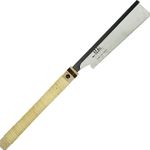
Suizan Japanese Pull Saw
A versatile saw that can be used for anything from kumiko to dovetails. Mike Pekovich recommends them as a woodworker’s first handsaw.
Sign up for eletters today and get the latest techniques and how-to from Fine Woodworking, plus special offers.
Download FREE PDF
when you enter your email address below.


