

Sticky Hands and the Lessons I Learned from Resawing Green Walnut on My Bandsaw
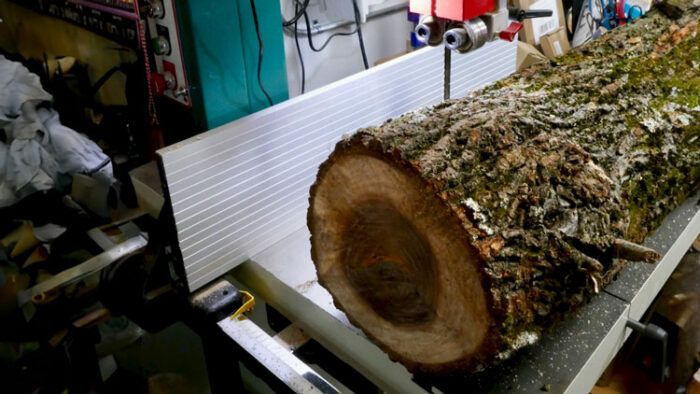
It’s surprising how, after three decades in woodworking, I could still be caught completely off guard by a simple, fundamental truth about the material I use every day. For thirty years, I primarily relied on kiln-dried lumber for my projects—either reclaimed wood that was already stable or new stock at that ideal 5% to 8% moisture content. I operated under the assumption that I knew wood.
But when nature presented an opportunity—a freshly trimmed walnut limb—I couldn’t resist. I decided to turn that beautiful branch into slabs. I honestly thought it would be simple. In fact, I speculated that the abundant moisture in the wood might even lubricate and smooth out the resawing process.
I was profoundly mistaken. The experience was messy, but it proved to be an invaluable lesson. While my story might caution some away from resawing green wood, for those who, like me, can’t bear to see a beautiful limb go to mulch, I can now offer a roadmap—and set clear expectations.
The Origin Story: From Automata to Air-Drying
This adventure began at the conclusion of a class I taught at Peters Valley School of Craft. My students had used crosscuts from walnut limbs and branches to build boxes for their automata projects. At the end of the class, I thought, Why don’t I take a larger limb—about 9 or 10 inches in diameter—and try cutting it into slabs?
That decision became my first real experiment in drying green wood at scale.
I had previously resawn holly, but that branch had been air-dried for three or four years and had lost most of its moisture. The green walnut, however, was an entirely different challenge—one I did not anticipate.


The Cakey Buildup: Sugar, Not Resin
As soon as I began resawing the walnut, I noticed the blade gumming up almost immediately. I’d seen blade gumming before when cutting heart pine. Back then, the fix was simple: mineral spirits dissolved the oily resin and sawdust buildup.
This time, though, when the blade developed a light brown, cake-like buildup after just one or two passes, mineral spirits did nothing. That failure forced me to stop and think—what was this stuff?
The answer turned out to be an “aha!” moment. The buildup wasn’t resin at all—it was sugar mixed with sawdust.
Green (or wet) deciduous hardwoods contain a lot of sap, and that sap is rich in sugar. Think about maple syrup: when you boil down maple sap, you’re essentially concentrating sugar water. Green walnut, cherry, maple, and similar woods all contain that same sugary moisture. When you resaw them, the blade’s frictional heat cooks that sugary sap together with fine dust, creating a hardened, sticky residue on the blade.

The Simple, Counterintuitive Solution: Water
The solution turned out to be wonderfully simple: give your blade a water bath.
I removed the blade from the bandsaw, coiled it, and dunked it in a galvanized steel tub of water. Within minutes, the sugary buildup dissolved completely. A quick wipe with a clean rag, followed by thorough drying, and the blade was good as new.


But the blade wasn’t the only part that needed attention. Two other areas gummed up and required cleaning: the guides and bearings, and the tires.
- The Guides and Bearings: These parts gummed up quickly and needed to be wiped with a damp rag or sponge—moist but not dripping—to avoid water getting into the saw’s interior.
- The Tires: The tires accumulated dried sap too, requiring careful cleaning to maintain proper tracking.


How much cleanup you’ll face depends entirely on how wet your wood is. The wetter the limb, the stickier the mess. But the trade-off for cutting green wood is worth it—because waiting too long to dry the limb in the round risks deep checking and cracking.
The Final Verdict: Mill Now, Dry Later 📏
I successfully produced 14 board feet of beautiful walnut slabs on my 17″ Grizzly bandsaw using a ½” blade. For that amount of resawing, I had to clean the blade, tires, and bearings twice.
Given the alternative—losing the log to checking had I waited—it was a small price to pay. The lesson was clear: Resaw now, clean later.
The golden rule for green hardwoods is simple: Mill your logs into boards or slabs immediately, then sticker, stack, and weight them for air-drying. It’s a sticky, messy job, but it’s the only way to preserve the lumber’s integrity.
Essential Preparation: Sealing
Before you begin drying any green limb or log, always seal the end grain. Use paint, wax, or a dedicated end-sealer to coat the crosscuts on both sides. This step prevents rapid moisture loss from the ends—a major cause of checking and splits. Proper sealing slows down the drying process, ensuring the wood stabilizes evenly and predictably.

The Soul Caretaker
So now that you know what to expect and how to prepare, you can decide if this is a road you want to take. Just be ready for that sticky surprise—and keep a bucket of clean water nearby for cleanup.
Unfortunately, unlike toddlers, who eventually learn to wash their own sticky hands after a sugar binge, your bandsaw won’t clean itself. You, the craftsperson, are its soul caretaker—and with the right attention, this remarkable machine will keep serving you faithfully through every experiment and every lesson nature has left to teach.
Fine Woodworking Recommended Products
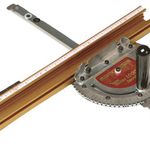
Incra Miter 1000HD
One of many extremely accurate Incra miter gauges, this model offers 180-degree adjustment to 1/10 of a degree, and a long, straight fence with a telescoping stop system.

AnchorSeal Log and Lumber End-Grain Sealer
Good for both sealing the end grain of freshly cut logs and boards, this wax prevents end-grain checking and saves material
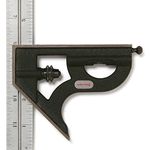
Starrett 12-in. combination square
This accurate, robust, well-machined, easy-to-read combo square is as great as ever.
Sign up for eletters today and get the latest techniques and how-to from Fine Woodworking, plus special offers.


