
STL359: Making the Most of Shop Time
https://www.youtube.com/watch?v=iSICS3WvbNc
Woodworking is short bursts
From Matt:
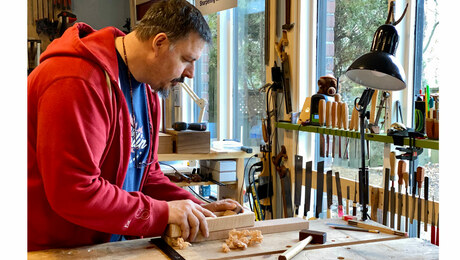
I’m curious how you juggle shop time and family. I wanna build a desk, which will be a pretty large project for me. It’ll likely take a few hundred hours to design and build. I haven’t built anything in the last three years. I can’t imagine building a complicated, for me, project in 45-minute to two-hour increments. Do you have any recommendations or tips that might help avoid mistakes caused by constant starting and stopping? I’d also be interested in any online courses or articles that have come in the last few years that would give me a refresher course on shop safety. The table saw can be a fickle mistress, and I don’t wanna put myself in a bad situation that could lead to injury.+
Practice, or you can’t complain
From Kevin:
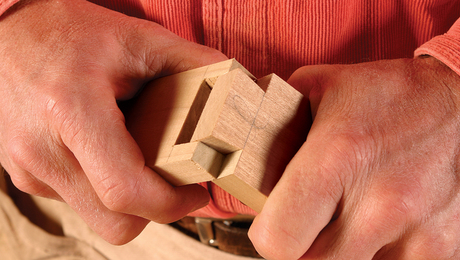
Vic recently got spicy, suggesting woodworkers just need more practice. What is something you recommend woodworkers do as a practice, and how do you measure skill proficiency in that? And what’s the next step to keep improving in the exercise?
Every two weeks, a team of Fine Woodworking staffers answers questions from readers on Shop Talk Live, Fine Woodworking‘s biweekly podcast. Send your woodworking questions to [email protected] for consideration in the regular broadcast! Our continued existence relies upon listener support. So if you enjoy the show, be sure to leave us a five-star rating and maybe even a nice comment on our iTunes page. Join us on our Discord server here.
For the sake of appeasing the robots, here is the show transcript, cleaned up using AI:
Welcome to Shop Talk Live, episode number 359. Today, we have Mike Pekovich, Vic Tesolin, Amanda Russell.
What else you wanna know? That’s enough to get me to listen. But before we listen, I wanna let everyone know three things—three exciting things going on at the Fine Woodworking universe. We’ve got two tours coming up.
There is September 7th through 14th, England’s Woodworking Heritage Tour with Mike Pekovich and John Binzen. Dream team if I’ve ever heard one. And not, not to minimize the dream team that is Phil Huber and Logan Whitmer, but in September 20th through 27th, we’ve got a Denmark and Sweden woodworking tour. I think they called it the Nordic Woodworking Tradition or something like that. I don’t know which one I would pick. Either one of them would be fantastic.
But also, I wanna let everyone know the last super exciting thing here in Fine Woodworking: May 1st and 2nd, Fine Woodworking New England is back in Manchester, Connecticut, at Bob Van Dyke’s Connecticut Valley School of Woodworking. It’s such a fun time—antique tools all over the place, and demonstrations, and talks by some of my favorite woodworkers. So head on over to finewoodworking.com/new-england and find out more.
So, we’ll have the tours linked down in the doobly-doo. We’ll have Fine Woodworking New England linked down in the doobly-doo. And this year, I am going to go out on a limb and say I am not going to throw my back out the day before Fine Woodworking New England. That is my God’s honest goal.
All right, on with the show.
Show:
What have you been up to, Vic?
It’s been—it’s—I sort of hit the ground running this new year. It’s been a lot of little projects, none of them actually involving making anything out of wood. But a lot of new students and some other teaching opportunities that have come up.
Oh, great.
So I’m just trying to—there’s a lot of stuff that comes up, and then I wanna say yes to everything because everything sounds so cool, but then I have to put it against the sort of litmus test of, like, is this part of my— is this what I actually wanna do? Or is this just like, “This would be cool, so I wanna do it”?
Yeah.
’Cause I don’t have a whole lot of time for cool at the moment. So it’s just a matter of prioritizing and thinking about it and learning to say no better.
That’s tough. I mean, I crossed that line in terms of commission work quite a ways back. There was a time when commission work really was nothing more than, “Can I get someone to buy the wood so I can actually make something?” Right. And then it got to be where I would feel obligated to take on anything that came my way. And then after a while, like you said, you kind of realize that, especially if you’re doing fine woodworking on a part-time basis around all the other stuff that life has to throw at you… am I getting paid to make something I wanna make, or am I getting paid to not be making something I wanna be making? It’s kind of like a zero-sum game.
So fortunately, a good friend of mine, he’s like a full-time woodworker, cabinet maker, and architect, and so if I have someone saying, “Can you make 30 picture frames for a showing?” it’s like, “No, but my buddy can.”
Yeah.
Yeah, that struck a chord. You know, is this something I really wanna be doing, or is it different motives other than that? I think that is really important to keep track of.
What are you up to, Amanda?
Me? I need to be getting in the shop more. I’m setting up a new shop. I moved into a much smaller—at least personal—my bench space is very small, like 140 square feet.
Okay. Wow.
With a larger machine shared area. Been moving into that, getting organized. It’s really more of a storage unit right now than anything else, but yeah, I gotta do a lot of work to get kind of going. But it’s good.
And then I’d really like to take on some commission work this year. I haven’t for a couple of years, just being too busy and not really having the time, but having a little less pressure to pay for a larger space gives me a little more freedom to work on the stuff I’d like to work on.
Good.
I’m hoping that’s coming soon.
Awesome.
Oh, my gosh. Yeah, it’s a big change for the new year, but happy I’m doing it.
We have a few questions I think are gonna take up quite a bit of time to answer—some really good ones. So why don’t we just dive right into those?
Love it.
The first one, I like this one, is from Matt. It’s kind of in the theme of what we’re talking about, but he’s asking:
“I’m curious how you juggle shop time and family. I wanna build a desk, which will be a pretty large project for me. It’ll likely take a few hundred hours to design and build. I haven’t built anything in the last three years. I can’t imagine building a complicated, for me, project in 45-minute to two-hour increments. Do you have any recommendations or tips that might help avoid mistakes caused by constant starting and stopping? I’d also be interested in any online courses or articles that have come in the last few years that would give me a refresher course on shop safety. The table saw can be a fickle mistress, and I don’t wanna put myself in a bad situation that could lead to injury.”
It’s a good question.
That’s a good point. It’s tough for folks who have a regular day job and then are woodworking in the evenings or on the weekends. When I’m teaching individual students, they’re all basically of that ilk.
Right.
They have full-time jobs, they work in the evening, they work on weekends. Sometimes, if they’re fortunate, they can reduce their work week to a four day and then have a day in the shop.
I have been preaching about what I call a triple O, which is basically an order of operations. I’ve done that ever since I was in the military, because everything in the military is a checklist, and so I have checklists for everything.
Before I logged on here, I had a podcast checklist: “Is my microphone serviceable? Is the audio thing serviceable? Am I actually recording?” I point to things because then it forces you to actually look at them.
And then when it comes to furniture making or any project really, I map out every step, sort of in big chunks—mill the material, then do this, then do that—and then each one of those steps gets broken down into much smaller steps.
I do that for almost everything that I do, mostly because I’m sort of in the same boat where I could be here in the office doing stuff for part of the day, and then I get a few hours to go down into the shop, and I do stuff there. But then I might have a couple of students the next couple of days, and then I sort of forget where I left off.
The longest time suck for a lot of woodworkers is scratching their head at the bench, trying to figure out where they left off.
Right.
And I think most of us suffer from that, whether we’re pro or not. So if you can create some sort of a document—on your phone, on a piece of paper, whatever—then you can walk into your shop and go, “Okay, now I’m gonna lay out the mortises,” and you don’t have to think about it.
If you’ve got 45 minutes because your kid’s asleep, you can do that, and you’re not spending all that time thinking about it.
Yeah, I agree with that 100%. Break down every process, then break down every process into individual processes. A really good rule of thumb is: don’t leave something half done. That’s a killer.
If you break everything down into enough steps that you can go out and get a step done—“I’m gonna go out and scribe the end lines of the mortises that I need to cut”—cool, do that. As opposed to getting about a quarter of the way through setting up to cut mortises and then it’s like, “Okay, wait, where was I?”
The biggest time suck is actually thinking about what you are gonna be doing while you’re in the shop. Think about woodworking whenever you’re not in the shop—when you’re driving, when you’re supposed to be paying attention in a meeting, laying awake in bed at night. I get most of my woodworking thinking done then, so that by the time I come in the shop, you know what you’re gonna do, you know how much you wanna accomplish. Get in there, get it done.
I’ve lived by the 45 minutes to two hours window of work for my entire career. I remember being in a woodworking show—Kelly Mailer was there demonstrating—and I asked him, “If you’re only gonna spend two hours in a shop, how do you really make sure you’re taking advantage of the time you have?” And he looked at me and paused, and said, “It takes me two hours to figure out what I want to do that day in the shop. What do you mean?” So yeah, it’s a foreign reality to pro woodworkers, but I’ve always found myself more in the part-time camp, so I empathize with people.
Yeah, especially something like this—taking on a huge multi-hundred-hour task. It is tough. A lot of us coming into the craft, it feels like woodworking is a natural pursuit once you have kids, once you have a house, once you really can’t go spend five hours on a golf course on a Saturday.
Yeah. I can be in my shop, which is pretty close to home, so that kinda counts.
So do what you can. You’re juggling a lot of plates, and it may feel really frustrating, like, “Man, I don’t get any time in at all,” but in the big picture, any investment you can make in the craft at that point in your life will pay huge dividends later on.
I think it’s super tough if you are maybe a couple years short of retirement or a couple years into retirement to say, “Hey, I think I wanna take up woodworking.” I know a lot of people who do that and have had good success, but that’s a really steep curve at that point. Anything you can get under your belt prior to that is just that much further ahead of the game.
Well, and I think too, Mike, the other thing—if I could wax philosophical for a moment—the Stoics tell us that the biggest thing that upsets us is when an expectation is not met. A lot of times when we’re juggling family and work and a hobby, we want to do the hobby all the time. But the reality is that we can’t, and we don’t accept that reality.
If you don’t accept it, you end up being upset because there’s this niggling thing inside you that’s like, “I wanna be out in the shop, I wanna be doing this. I should be able to do this,” but you can’t. So it’s a sort of radical acceptance: “I’m a parent, I’m a spouse, I’m an employee, and I’m a woodworker.” That will allow you to be content with that 40 minutes, as opposed to the 40 minutes running out and you going, “Ugh, I wish I could stay out here all day.”
Yeah.
I wanna second the checklist thing. I talked about this at Woodworking in America. I presented on small shop production and having checklists and the order of operations, like you said, Vic, is super important. I also color-code my checklist so if I have, like, say, in green, it’s all the steps I need to do for this sub-assembly, then there’s a green title to the next step. That sub-assembly goes into an assembly.
Even if I’m checking off one small task—whether it’s 45 minutes of labeling where mortises go or something—I have this physical thing that shows me I am making progress, even if it doesn’t feel that way.
But also, it’s just the practice of woodworking. Forty-five minutes might not be a lot of time to contribute to a project, but 45 minutes of practicing dovetails is pretty valuable. For me, sometimes it’s hard to justify going to my shop—it’s a 25-minute walk each way since I don’t have a car—so I have to really make time for that.
But I’ve been trying to think of a side checklist that’s just the practice of woodworking. Even if I get in there, I’m not maybe working on a project right now, but I can justify spending an hour of travel time for two hours of practicing something.
So having a checklist for order of operations, but also a checklist of skill-building things you can do in a small amount of time, where it does feel like progress, I think is really important.
Well, I agree with you 100%, and I would love offline to discuss your color coding, because like I said, I’ve lived in checklists my entire life. I had no guidance when I was 18 and joined the military, but it was quickly foisted upon me in the form of checklists. So I’d love to talk about that. I was hoping there were gonna be some nuggets of information about checklists I haven’t discovered yet.
But yeah, I think you’re right. The one thing woodworkers chronically do, especially new ones, is they overestimate how much time something is gonna take to do.
Let’s say you were gonna cut some mortises with a router—nothing fancy, just a router and a fence—and you’re just gonna cut mortises into legs. The setup takes a bit of time, but once you actually are cutting the joint, that doesn’t take very long at all.
And Mike, you do a lot of work with the hollow chisel mortiser—once you set the machine to do what it’s gonna do, now you’re plowing through it.
So I think we chronically overestimate. A lot of times it’s like, “Oh, God, I can’t start that yet. That’s gonna take me two hours,” and then 40 minutes later, it’s done.
The checklist also allows you to make notes about how long processes take. Then you’re more equipped, and that doesn’t take very many projects to do. If you journal about your progress—“This took this much time”—the next project, it’s like, “Oh, okay, I only need 45 minutes to mark out and cut these mortises.” You start to be able to plan better, as opposed to this nebulous project thing.
And it allows you to pivot as well, which, when you’re in a shared shop, is really important. If you need a table saw set up and somebody’s doing a bunch of milling that day, then you’re not. So instead I look at my checklist and I’m like, “Well, I can sand and pre-finish these parts that I did before.” It allows pivoting and keeping a project going.
I had points of frustration where I came in mentally thinking I was gonna do this, but I have to pivot. But having this physical thing—there’s a million other little steps I need to do that can get done today.
Well, and I heard Eric’s a little bit of a power tool hog.
Yeah, I’ve heard that about him. I’m out of the shop now, I can say that.
Sorry, Eric. No, I’m kidding. But with him filming, that was a thing. He has to have a camera set up, and I understand it. That’s how he makes a living. So I can sand something quietly or pivot. That’s an element of sharing space with other people, and for people going to maker spaces, that can be a thing.
Huge on the checklist thing, and I’ll share that in the show notes from my PowerPoint—how I kind of do that.
Okay.
One thing I do—it wasn’t necessarily about efficiencies—but it’s something I’ve adopted on every project I make, and it’s really helpful. If I’m milling a bunch of parts, taking them down to size, before I start to cut the joinery, I take the time with a grease pencil to mark super rough general location where every piece of joinery is gonna go. Here’s a mortise, here’s a tenon, here’s a dovetail, here’s a slot, here’s a dado.
One of the main things it did is it separates the two thought processes of “where is this tenon gonna go?” and “laying out the tenon to really precise dimensions.” Those are two separate things, because I don’t wanna be laying out a tenon worrying about whether it’s in the right place.
I don’t wanna be cutting a dado or a rabbet at the table saw worrying if I’m hitting the right edge or the right piece. So I have these grease pencil marks to show me where the joinery is gonna go.
And the by-product is by the time you do that—mark out every little mark where a joint is gonna go—you’ve kind of done a super shorthand build of the entire project. You know every joint that’s gonna be cut, and now you can see everything in a much bigger picture.
One of the problems of working stop and start is that your processes can either work for you or work against you. Usually it’s: “What do I wanna do? Let me go ahead and do this.” Then: “What am I gonna do next?” Oops—should have done this before I did that.
Whenever you’re trying to make up for things that you’ve done, the progress starts to slow down, you stop having fun, you start feeling like you’re moving backwards instead of moving forwards.
Let alone cutting a dado on the wrong face of a board. Now you’re patching things, and the further along you get in a project, my gosh—if you actually cut dovetails on the end of a board and realize it’s wrong, that’s a huge thing. It’s like, “Okay, this has dovetails. I cannot throw this away. I cannot throw away the effort invested,” and then you really start stressing out and getting good—attempting to get good—at fixes beyond that point.
So marking all the rough locations of where everything is gonna go gives you a bird’s-eye view of everything you have to do and hopefully helps order your processes a bit, so your checklist is in the right order once you do write it down.
Good habits.
You know, it’s interesting you say that, Mike, because I learned this trick from Garrett Hack when he was teaching at Rosewood. When he’s in the milling process, he uses a crayon to mark the grain direction. He puts a line going from down to up where he’s discovered the grain—not just reading it, but what is the machine doing or what is the tool doing?
That way, every time he picks up that component, he knows which way the grain’s going. He doesn’t have to look at it. He doesn’t have to think, “Oh, it looks like it’s going this way, but is it really?” So that was a neat trick too—just that coarse mark that turns your brain off. Now, you know. You’ve got a good reference.
That’s a great point. I’ve gotten in the habit of—and it depends on the layout of your shop—but in the last shop I was in, I assess at the jointer which face I’m gonna mill, and then, as I come off the jointer, I’m facing the outfeed of the planer. So I orient that board the way it’s gonna go through the planer.
By the time I take that on a cart, I’m not having to rethink what face is being planed and what direction. Then that’s oriented on the cart to where when I take it to the table saw, the two originally jointed faces are against the fence and down on the table.
Getting in those habits saves a lot of time of having to second-guess what you did. Including marking, but I try to get in that habit too—boards oriented the same way depending on what machine I’m approaching with.
Makes sense.
Yeah, those efficiencies are so important, and it’s such a subtle thing. I think it takes a while to wrap your head around that. But stacking your parts in the correct orientation so you don’t have to worry about it for the next pass through…
And kind of what you’re saying, Vic, it’s like, millwork, jointing and planing—don’t you want to get someone to do that for you? It’s like, no, that’s when you do all the detective work. You know where the grain turns around, you know where there’s a knot, you know all of your parts and pieces.
You’re doing four legs. Is there a sliver of sapwood, or the grain gets a little squirrely on one face, or there’s a little knot? You’re planning the entire project—where every part is going and what orientation it’s gonna find within that final piece.
That milling process—I love that.
Yes.
And you’re right, one board, and you’re going in the jointer, and you hear this tick, tick, tick. It’s like, okay, I’m gonna remember that. When I pick up the hand plane, I’m gonna be careful, or maybe the card scraper is gonna take care of that for me.
Working with Philip Morley, when I was doing runs of his chairs in production mode, it was like, that board might have this huge knot in it, but that’s a perfect arm, and we’re gonna cut a cove cut right where that knot is.
So you know. And working with somebody else got me in the habit of orienting boards a certain way. Assisting classes too—if you’re teaching, you wanna know you can pick up a board, do a process, and it’s where it needs to be. You’re not there trying to second-guess. There’s this language you learn as you work with other people.
That is the fun part of milling. It’s like, well, that’s a perfect board for this, actually, even with that giant tear out right here. But it’s gonna be just fine.
Yeah, and sometimes you get that little knot, and it’s like, I either wanna get rid of it or have it in the middle of the piece. I don’t wanna cut halfway through it.
Right.
So it’s like, am I gonna cut it off, or should I just keep it and make sure I don’t cut halfway into it?
Yeah.
And then you get out the template, and you put it on there. It’s like, oh, I can just—right there.
Yeah.
I feel like knot or no knot, by the time I’m done milling, it’s like, man, this whole thing is horrible. There are so many defects here. But by doing your best—hide what you don’t want, get the good faces where you do want them—by the time I’m done, everything looks good. It’s the times when I don’t pay attention that it comes back to bite you later.
Sorry, I was gonna say, I think that whole knot situation—it’s like, do I include the knot, or do I not include the knot? There’s acceptable arguments for both. There is zero acceptable argument for cut it in half.
Right.
Yes.
’Cause it doesn’t look good. Feature the very middle of that knot.
Yes.
Definitely.
How do you feel about jumping into another question?
Sure.
Okay. If we have time for one more. I had a feeling this was gonna be a long answer, but I love it.
This is one I added this morning. This one’s from Kevin. He said:
“Vic recently got spicy, suggesting woodworkers just need more practice. What is something you recommend woodworkers do as a practice, and how do you measure skill proficiency in that? And what’s the next step to keep improving in the exercise?”
So, I don’t know if I got spicy. I feel like that… I was just calling it the way I saw it.
A lot of people, when you do any sort of physical task, it doesn’t matter what it is—there’s something about getting the reps in and doing it. You can read all the books in the world, but you have to put your reps in.
No golfer goes out onto the course first thing in the spring without hitting a bucket of balls first, and if they do, they’re not serious about getting better.
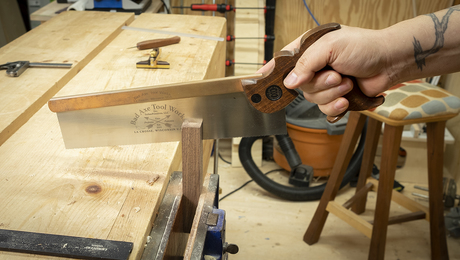
So for me, take sawing, for example. A lot of people complain about not being able to saw straight. The way to learn how to saw straight is to saw stuff.
I recommend people get a twelve-inch piece, like six-inch wide piece of three-quarter-inch poplar, strike a line, and then just straight cuts—don’t even do angles. But don’t just cut, cut, cut, and then look at them afterwards and go, “Oh wow, that’s awful.”
Make a cut, look at the cut. Which way is your saw biasing? Everybody biases one way or the other. Or if you’ve got a poorly sharpened saw, it will do it for you—but assume that’s not the case for now.
If you’re leaning to the right, try to coax the saw over to the left a little bit the next time. Then do it again and again. You have to look at each one and be critical of it. Within an hour you’re playing little games with yourself: “I’m gonna be on the right side of the line. I’m gonna be on the left side of the line. I’m gonna take the line.” You can challenge yourself.
Then you go about your tasks in the shop. You’re starting a new project and it requires you to cut dovetails. You’re not just gonna lay out your dovetails and start cutting them. You’re gonna get a scrap piece of wood and remind yourself: “This is how I cut. This is how I meet this line.”
I think Gary Rogowski did an article about the five-minute dovetail, where he gets his brain into the frame of mind by quickly doing a dovetail to warm up: “Yes, I gotta hold the saw like this, I gotta do this, I gotta do that.” Now he’s warmed up his brain, warmed up his body, and now he’s going for it.
But what you can’t do is moan about not being good and then not practice. You can’t do that. One or the other.
It’s extremely rare that I’ve ever worked with anyone who wasn’t capable of improving. Mike, you’ve taught hundreds of students. There’s… it’s very rare that somebody is completely inept.
Right. Go golf.
Right.
Same. I don’t golf because I suck at it, and I have no desire to get better at it.
The goal when you’re practicing is to develop the unconscious competency—stop thinking about the actual process, and your body just naturally does it.
I used to think that about Garrett Hack. The first time I saw him operate a block plane, I was like: “That’s incredible. That tool is just an extension of his hand. How is he doing that?” And then there’s this time where you recognize, “I haven’t been thinking about how to use this. I’ve just been doing it.” And you realize, “Oh my goodness, I might have gotten it.”
That’s the key. There’s no next step. If you can reliably cut on the line, off the line, leave the line, take the line, left side, right side—then you’re good. And then keep practicing, because the second you don’t, you lose it.
And then you gotta make sure your layout lines are in the right place once you actually make a piece of furniture, because if you nail a line and the line’s not where it needs to be, that’s a whole different skill set.
So, Amanda, what do you think in terms of practice? You mentioned possibly getting some time to actually do some practice work. My guess is you’re either woodworking or you’re not woodworking. I don’t see you as like, “I’m gonna go spend a day practicing saw cuts.”
I mean, I really wanna get good at dovetails this year. This is a goal. It’s been for a while, and I’ve avoided it. And it’s one of those things that if somebody asked me to do it on a piece, I wouldn’t feel very comfortable.
So I’ve kind of made a list of things I’d like to have in my back pocket when it gets brought up for a commission in the future, where I’m not having to account for time learning how to do that thing while I’m in the middle of a project.
I used to think there were naturally good woodworkers, and I think now I’ve learned that it’s practice. It’d be almost insulting to look at Philip the way I used to and think, “Oh, he just picked this up.” It was hours and hours and hours of dedication. I’m not a naturally good woodworker and I never will be. It’s all repetition.
So yeah, practice is super important. And the little checklist side thing—having a list of small things I can do and improve on. Even looking online: being on the website so much, I’ve learned a lot from watching videos and reading articles, and that’s in the back of my mind: “Oh, I’ll add that to the list.”
Yeah, you sell yourself short. You’re a fantastic woodworker. I get improving certain skill sets, but I think the most important skill in woodworking is your thought process—how you can think through a project. That creative problem-solving aspect, you’ve got that nailed, and that’s where a lot of people really struggle. It’s not so much the skill set; it’s thinking something all the way through.
This notion that you can read enough articles or watch enough YouTube videos to be prepared to face every challenge you’re gonna face in the shop—you can’t, and I don’t think that’s the point.
For me, I love getting into the shop and figuring out how to do something—how to set up a machine, or come up with a series of steps to make a process easier. I love that part of it.
So for me, I don’t know if you would call that practice, but first disclaimer: I do not have the patience to practice anything.
The last thing I wanna do is make a dovetail corner and throw it in the wood pile and burn it in my wood stove. It’s like, “No, I’m not gonna let that go to waste.”
I do like the idea: if you’re gonna practice dovetails, get four boards. That gives you four chances to practice. By the time you’re done, they’re gonna be ugly and gappy, but guess what? They’re not gonna fall apart, and you’ve got a nail tray or whatever, a shelf to hang up on your wall. So I think it’s more that level of thing.
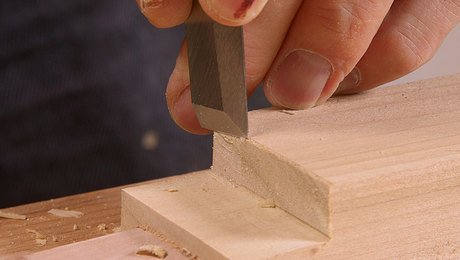
Instead of just doing one sample dovetail, if you’re doing four pieces, dovetail each corner, then you’re getting into cutting parts to length accurately, to layout, and it leads to that next level of working on the skill set of actually building.
While I don’t wanna waste a dovetail or a saw cut, if you jump right into this project, which is super ambitious, that’s super tough too.
So I’d say a lot of what I would consider practice are no-risk pieces, where I just wanna go out and make something. It’s not an article, it’s not a commission. I’m just gonna go out, I’ve got an idea, I’m gonna bang it out, and then you end up with something less than perfect, but often has a real spark to it.
It still has the gesture to it. It’s still got a little flair. And if I were to make this again, I know what I would make different. The legs are a little bit fat in this one, those tenons are a little bit small, but it points the way forward to a nice piece.
Go out and make unimportant stuff. Go make a toilet paper holder for the bathroom, or a cabinet to hold the laundry soap down in the basement next to your washing machine. I think that level of practice moves your work forward as well.
That really strikes with me, because I remember the pressure of making and designing a first piece after working with Phil for a while. I dwelled on it over and over again. It ended up being the easel, I think, was the first thing I really made.
But getting to that point—designing for weeks, beating myself up over it—and Phil’s like, “Who do you think you are? You think your first piece is just gonna be perfect and gorgeous and flawless?” And I was like, “Oh my gosh, you’re right.”
That’s as important as any amount of repetition: designing and making something to completion informs other pieces. You’re not gonna design the most beautiful piece you’ve ever built the first time. You just have to do it and get it out.
Yes.
Shop furniture is a fantastic—
Yeah.
Like, shop furniture or decor or storage bins—that’s the best thing in the world to practice on. If you wanna learn how to make a box, like a dovetailed box, you don’t start with Uncle Morty’s urn.
Right?
Well, he’s not gonna see it.
No, he won’t complain.
But the reality is: make a little box to put your favorite plane in, or make a little tray. I always teach people—this little single dovetail box. It holds quarter sheets of paper.
If it turns out great, awesome. If it turns out like garbage, who cares? You can always put wood filler in it and paint it. But you’ve gone through the process.
And Mike, you’re absolutely right: an individual joint teaches you next to nothing. Having to make sure all four joints come together, the right size, the pieces are the right size, the box is square—all that stuff. You can practice multiple things at once, including layout. Because those are all the things you’re gonna come up against.
You gotta practice milling, you gotta practice layout, you gotta practice cutting the joinery. All of that has to come together. You can never do one portion of that without the rest of it.
Right.
Amazing. Cool.
All right. That was two questions, but I think we did pretty good. I love talking with you guys.
Yeah.
Yeah, that’s what it’s about.
This ended up being really fun.
Yeah.
I really enjoy these. But yeah, thank you guys so much, and we’ll have to do this again soon.
100%.
Why not?
Okay, that does it for this episode of Shop Talk Live. Thank you to Vic, Amanda, and Mike. If you’re watching on YouTube, please click that thumbs up button.
If you’re listening on Apple Music or Spotify or whatever, a five-star review does us so much good.
Also, if you aren’t subscribed to the new YouTube channel, please head on over and subscribe to the Shop Talk Live YouTube channel. Even if you don’t listen there or you don’t watch there, whatever—it helps us juice the algorithm.
All right, that does it. We’ll see you in two weeks with another episode. Thanks for listening.
Sign up for eletters today and get the latest techniques and how-to from Fine Woodworking, plus special offers.