

UV-cured filler is quick and easy to use
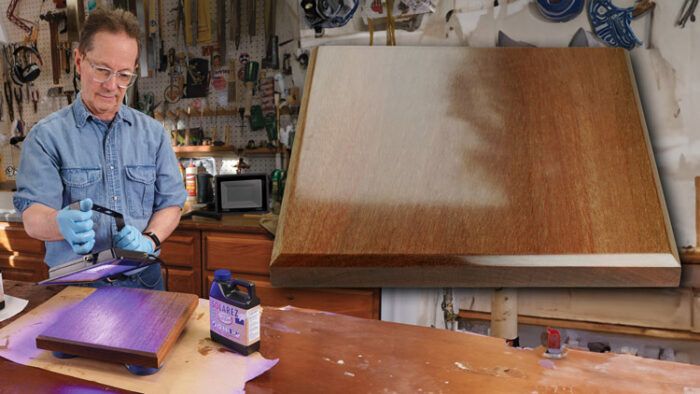
What does it mean to fill the grain, and why would you do it? Filling the grain is filling the pores of wood, before applying a finish, so the final finished surface is perfectly smooth. Think piano finish—not opaque in this case but with the same unbroken polish. There are many products and approaches for filling grain, but the final look is similar.
With woods like maple or cherry, which have tiny pores that will be filled by a film-forming finish like shellac or polyurethane, grain-filling isn’t necessary. But with larger-pored woods like mahogany, you’ll need to fill the grain to produce the flawless surface and deep sheen of a high-style look.
This type of finish is most popular on period reproductions, but it will make any project look more formal and give small pieces like boxes and bowls a jewel-like gleam. I also use grain filler to fill small defects in burl wood.

Filled grain isn’t appropriate for all types and styles of woodworking projects. Pores are one of the things that make wood look like wood, and you can beautify your material and add a deep sheen without filling the grain. In fact, many woodworkers prefer to see and feel some grain texture on their work. Also, any film-forming finish will fill the pores at least partially, refining the look of the finish without subtracting any of its handmade feel. Filled grain can also clash with the rustic appeal of large-pored woods, like ash and oak.
But if a filled finish seems right for your project, you’ll be happy to hear it’s easier than ever, thanks to a new category of products. Before I get to them, let’s talk first about the traditional approaches.

The usual methods
One of the oldest methods for filling grain is French polishing, a finish made by mixing pumice into shellac. A proper French polish is a beautiful finish, but applying it involves a rather steep learning process.
Oil-based grain fillers have also been around for a long time. These are thick pastes that are rubbed into the grain. They require multiple coats, and each coat has to dry overnight before the next is applied. Also, the filler is opaque, which is great if you want to give the pores a contrasting color, but not so great if you don’t.
You can also fill pores with the finish itself. This requires quite a few coats, though, and a fair amount of sanding to level the surface. If the finish is oil-based, each coat will need to dry overnight.
A variation of filling with finish is sanding the still-wet surface to create a slurry of sawdust and finish. This fills the grain faster than the finish alone, but it requires even more sanding.
Waterborne fillers are a popular modern approach. These dry clear, but they can be tinted with dyes or pigments to create pores with a contrasting color. While they dry fairly quickly, they tend to shrink as they do. So they require extra coats, and they can be difficult to sand.
My favorite filler

I’ve tried just about every method, old and new, for filling pores, and my favorite by far is a new variety of grain filler that cures rapidly when exposed to UV (ultraviolet) light. The product I use, which is made by Solarez, has a goofy name—I Can’t Believe It’s Not Lacquer Grain Sealer. It’s inexpensive and simple to apply. It cures in minutes in sunlight, even on an overcast day, and it sands beautifully. Because it has very little shrinkage, it only requires a few quick coats, and it can be followed by any topcoat I know of, oil-based or water-based. In short, you can completely fill the grain in the morning and begin applying your favorite topcoat that same afternoon. You can also use an artificial source of UV light to cure the grain filler.
How it works—In contrast to the slow oxidation other finishes rely on, UV-cured grain filler dries and cures quickly in UV light. If it isn’t exposed to UV light, a UV-cured grain filler will remain wet for days. This means you have unlimited time to apply it and adjust the amount left in the pores. Shop lights don’t emit enough UV light to cure the filler, so you just have to watch out for direct sunbeams coming through the windows.
I Can’t Believe It’s Not Lacquer Grain Sealer is 100% resin (according to the manufacturer) and doesn’t contain solvents, so it doesn’t shrink much at all. That’s why it only takes two or three quick coats to completely fill the grain, and also why a bottle of the product will go a lot farther than an equal amount of solvent-based filler.
Use it with film-forming finishes—Because grain-filling begins to build a film on the surface and inhibits oil finishes from penetrating into the wood, I would only use grain fillers with a film-forming finish, such as lacquer, shellac, or polyurethane.
How to apply the grain filler

Before filling the grain, I sand the surface up to 180 or 220 grit. Then the filler goes on. You can apply it with just about anything. To spread it thinly and evenly and minimize sanding, I apply it with a squeegee when I can, like the 7-in.- or 8-in.-wide type sold for showers. For vertical surfaces and edges, I use an inexpensive nylon paintbrush.
 |
 |
I Can’t Believe It’s Not Lacquer Grain Sealer is a bit thicker than oil-based topcoats like polyurethane, and a little bit goes a long way. On horizontal surfaces, I pour a small amount directly from the bottle and spread it around with the squeegee. I sometimes use an old credit card on small projects. You can’t pour the filler onto vertical surfaces, so I use a nylon brush to work it into those.

I use the squeegee to remove whatever excess is there, and a brush or rag where the squeegee won’t work. This will reduce the amount of sanding required. If you are after a fully filled surface, the goal is to remove the excess on the surface without pulling filler out of the pores.

Protect the project from direct sunlight until you are ready for it to cure.
Resin cures in natural or artificial light
To cure the grain filler, I almost always take the piece outside and expose it to the sun. Full sun will cure the surfaces in just two or three minutes. On an overcast day, it might take five or six. You won’t have to move the project around much, because ambient sunlight will cure all exposed surfaces. The sun’s rays aren’t as strong in the winter, but they will still cure the filler, and cold temps aren’t a problem.

Artificial UV lights—You can also use an inexpensive UV lamp to cure these products. For occasional use, I recommend the LED blacklights sold on Amazon that emit the right wavelength of UV light and do a fine job curing the resin. At under $30 each, they are so inexpensive that you could buy two of them to speed things up.

I Can’t Believe It’s Not Lacquer Grain Sealer requires UV light with a 385nm wavelength, so check the specs on a light before you buy. To make the process go quickly, be sure the lamp is rated for at least 150 to 200 watts.
One or two more quick coats
 |
 |
Once the first coat is cured, lightly sand off the excess on the surface. Don’t over-sand, or you will sand past the thin layer of filler in the pores and need to start again. Apply additional coats in the same way until the pores are completely filled and the surface has no texture. Sand after the last coat with 180- to 220-grit paper to prep the surface for a topcoat.
Partially filled grain is an attractive option

I Can’t Believe It’s Not Lacquer Grain Sealer can also be used to fill pores partially, giving open-pored woods a slightly more formal and refined look without detracting from a piece’s handmade appearance. That’s what I did on the mahogany nightstand pictured below.
Partially filled grain looks great on larger-pored woods like the mahoganies, sapele, and padauk. It doesn’t make as much sense on woods with medium-size pores, such as walnut, because a film finish will fill those pores partially on its own.
As before, prep the wood surface up to 180 or 220 grit, and apply the filler however you want. The main difference here is how you remove the excess. Use a rag this time, which will let you pull some of the filler out of the pores. Moving the rag in the direction of the grain will pull out more filler; moving it across the grain will pull out less.
After the filler is cured and sanded, take a close look and decide whether the pores are filled enough for the look that you want. It’s easy to apply another thin coat or two if needed.
Charlie Kocourek lives in Minneapolis and teaches finishing at several woodworking schools.
Fine Woodworking Recommended Products
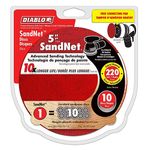
Diablo ‘SandNet’ Sanding Discs
While Diablo’s SandNet disks perform similarly to conventional paper abrasives in terms of material removal and surface prep (with some exceptions at the lower grits), they make keeping your work surface and work area clean much easier, thanks to the great dust collection possible with them.
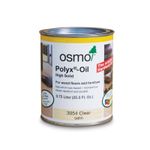
Osmo Polyx-Oil
“If I had to choose one of these hard-wax oils to keep on hand, it would be Osmo Polyx-Oil. It’s relatively affordable and very easy to apply.” -Adam Godet
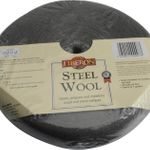
Liberon Steel Wool
Perfect for rubbing out a finish for a low-luster sheen.
Sign up for eletters today and get the latest techniques and how-to from Fine Woodworking, plus special offers.
Download FREE PDF
when you enter your email address below.