

I Discover Shibusa – FineWoodworking
Synopsis: After years of searching for a craft that could deliver a more meaningful creative experience, Tad Baum encountered furniture maker John Reed Fox, whose process-focused approach initially seemed impractical but later proved transformative. Through lessons that emphasized sharpening, hand skills, design critique, and thoughtful making, Baum learned not only woodworking techniques but a philosophy of craft grounded in humility, restraint, and clarity. Central to this shift was his discovery of the Japanese aesthetic of shibusa.
For decades, I had a desire to learn a craft so I could create something beautiful. I began by trying to envision the type of piece that would satisfy my creative urges were I able to produce it. But I had great difficulty imagining such an object. I looked at work by silversmiths, potters, photographers, woodworkers, and more. Some of the craftsmanship was exquisite, but none of the work seemed as if it could deliver the sublime experience I was in search of.
During my search, I discovered there was a furniture maker in my town named John Reed Fox. I called him to ask about lessons, and he invited me to his studio to discuss my interest. He showed me around the studio and told me a bit about his work, including his use of Japanese hand tools. He handed me a plane shaving and enthusiastically said that it was only one-thousandth of an inch thick. I had no frame of reference for understanding the significance of this. Undiplomatically, I asked, “Do you think your clients appreciate that you work in such fine increments?”
Without hesitation, he said, “Maybe not, but I know what it means to shape a piece one shaving at a time.” I decided not to pursue lessons with John. I wanted to learn a craft as efficiently as possible; spending time on Japanese hand tools seemed esoteric and tangential. I would come to see this as not one of my better decisions.
After more years of fruitless searching, it occurred to me that rather than judging a craft by the tangible items it produced, I should look at its creative process. I thought of John. Could his approach be what I was looking for? I contacted him and asked if he would take me on as a student. He suggested that we meet for a lesson on sharpening, after which I could decide whether or not to continue.
John explained how he uses a series ofstones to sharpen a plane iron. He began his demonstration by flattening the first stone with a lapping plate. I sat and watched as he slid the plate back and forth across the stone until it was flat. He then started to work on the iron.
He held it at an angle on the stone and slid it back and forth. I continued to sit and watch. He said very little as he worked, pausing periodically to inspect the iron or rinse the slurry from the stone, and then resuming the back-and-forth sharpening. I grew restless.
When was he going to let me try? After quite a while, he set down the iron, looked at me, and asked, “What do you think?” He said this was the point at which most students decided to part ways. It was an educational first lesson.
Clearly, studying John’s approach would require patience and perseverance. I told him that I would like to continue. Subsequent lessons covered shop machinery, hand sawing, plane tuning, and chiseling. My first project was to make a marking gauge. It required chiseling a mortise within which the arm of the gauge would slide.
 |
 |
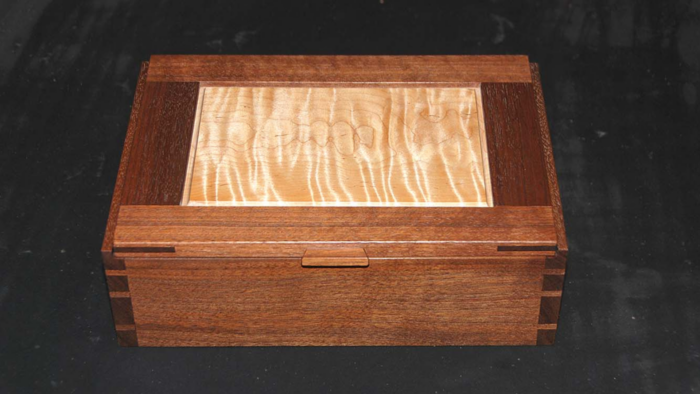
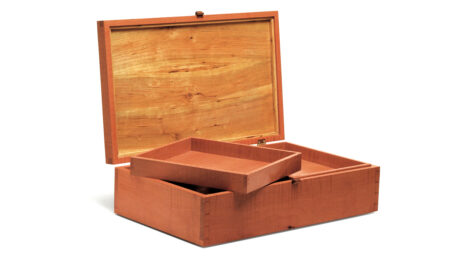
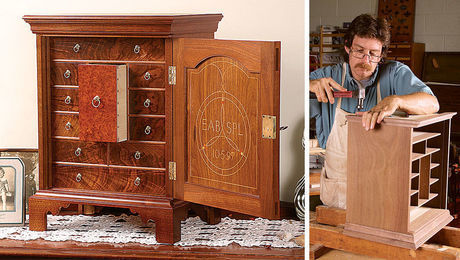
After teaching me a variety of hand-cut joints, John suggested I make a jewelry box that he had designed, which required frame-and-panel construction, hinge setting, lid fitting, and finishing. When I was ready to attempt my own design, I decided to make a cherry nightstand.
 |
 |
John suggested I draw a sketch and bring it to him for discussion. He pointed out what worked and what was problematic, giving me enough information to understand problems but leaving room for me to come up with solutions. Many times I refined the drawing and returned with it for further review. When I had a sketch that seemed reasonable, John had me make a full-scale mock-up of the nightstand, and we went through the same critiquing process. To make the nightstand’s convex doors, I learned to cut veneers and make a bent lamination.
The most transformational lessons I received from John were not in technique, per se, but in the discussions we had regarding design, craft, and the roles of furniture and the craftsman. I wanted my pieces to be unique, beautiful, and stunning. I struggled to come up with designs that would live up to such expectations. John told me that good furniture “can be simple but not plain,” and that “it knows what it is.” And he emphasized that “good craft has no ego.” He also suggested that I research the concept of shibusa.
Shibusa, I discovered, is a Japanese aesthetic that embodies simplicity of form and restrained elegance balanced by subtle complexity. It might be expressed in a detail not immediately evident but increasingly apparent over time. It values naturalness, tranquility, functionality, and the imperfection of everyday objects. I began to think of furniture as contributing to the emotional milieu of its setting.
It can be elegant and modest and avoids distracting from the harmony of its surroundings (simple but not plain). It doesn’t overextend itself by trying to be more than it is (it knows what it is). It should not be exploited as a vehicle to brag about the maker’s technical skill (good craft has no ego). Studying with John has been a gift. He has given me much more than a set of technical skills. He has enabled me to engage with my craft in a manner that is deeply satisfying and meaningful. I’m extremely fortunate to have met him.
Tad Baum works wood and pursues shibusa in Acton, Mass.

Fine Woodworking Recommended Products
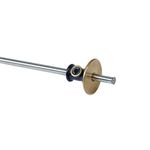
Veritas Standard Wheel Marking Gauge
The gauge is very easy to set, since it has an internal O-ring to keep light but constant friction on the rod. A very comfortable gauge to use.
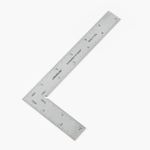
Veritas Precision Square
This precision square is incredibly versatile, from checking squareness to dialing in machine setups.
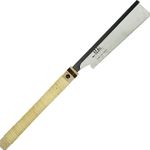
Suizan Japanese Pull Saw
A versatile saw that can be used for anything from kumiko to dovetails. Mike Pekovich recommends them as a woodworker’s first handsaw.
Sign up for eletters today and get the latest techniques and how-to from Fine Woodworking, plus special offers.


