

Choosing a Backsaw – FineWoodworking
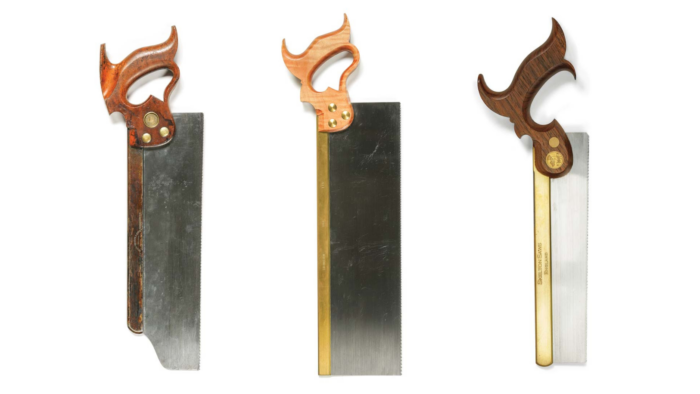
While some woodworkers prefer to use Japanese-style handsaws, which cut on the pull stroke, others prefer Western-style saws, which cut on the push. Because a push cut puts the blade in compression, Western saws need thicker blade plates to prevent them from buckling, and they often add a spine, or sawback, to increase stiffness further.
Their beefier build makes Western-style saws pricier, but it also makes them much easier to sharpen. Most woodworkers who use Japanese sawblades simply replace them when they become dull, while users of Western-style “backsaws” can maintain their blades for life.
This means that you can find very good backsaws on the used market and restore them to their former glory. See my article in last year’s Tools & Shops on rehabbing and maintaining a vintage-style backsaw (FWW #320), as well as my earlier step-by-step sharpening guide (Handwork, FWW #250), for everything you need to know.
The advice in those articles holds true for both new and vintage backsaws, as does my advice in this article on choosing the right Western-style backsaws for your needs. I’m the founder and former owner of Bad Axe Tool Works, a manufacturer of high-quality Western-style backsaws.
In that role I helped thousands of customers navigate the world of traditional handsaws. After retiring and selling the company to its employees in 2022, I started a part-time business repairing vintage saws and teaching saw-maintenance seminars. I’ve learned a lot about matching makers with saws.
There are quite a few different handsaws in manufacturers’ lineups, and the choices can be overwhelming. For a variety of reasons, users tend to go with a dedicated dovetail saw as their first backsaw. This is a mistake, in my opinion. Cutting tight dovetails is a skill that comes later in the journeys of most woodworkers, after they’ve mastered a variety of more basic hand-tool tasks.
Therefore, most users will derive more value from a larger, more versatile backsaw—one that can cut dovetails and much more. That is the carcase saw, which stays on my bench for about 75% of my cutting requirements. After that I recommend a tenon saw, and—finally—the dedicated dovetail saw that most folks start out with.
1. Carcase saw
Whether you buy a new or vintage carcase saw, here’s what to look for, as well as a few examples of what this versatile tool can do. I recommend hybrid sharpening, but you can do this yourself, so the teeth don’t have to be filed this way to start.
 Carcase saws can do it all. A 14-in.-long carcase saw, with the teeth filed “hybrid” for ripping and crosscutting, will handle everything from basic crosscuts to dovetails, tenons, rabbets, dadoes, and more.
|
|
|


What to look for. Go for a 14-in.-long saw with a 0.018- to 0.020-in.-thick, 13- or 14-ppi blade, filed in a hybrid pattern. There are quite a number of new and used saws with these specs.
 |
 |
Good for almost everything. This saw can make basic crosscuts, rip cuts, and miter cuts, and it can handle most of the joinery you’ll cut, from dovetails and tenons to rabbets, dadoes, and more.
Start with a long, hybrid-filed carcase saw
A carcase saw is sizable enough to handle large crosscuts and big miters, yet it is refined enough for fine joinery cuts. It’s the workhorse of the backsaw arsenal. Hybrid-filed teeth cut beautifully across the grain, and they rip quite efficiently as well. To make your carcase saw as versatile as possible, look for a longish one that has a relatively thin blade.
A longer saw allows you to lengthen your cutting strokes, which will help you cut straighter, and it also distributes wear along the toothline, keeping the teeth sharper for longer. A number of saw makers—including Bad Axe, Lie-Nielsen, and a few smaller operations—offer a 14-in. saw (with the specs cited at right)rather than the usual 12-in. model.
2. Tenon saw
The tenon saw is a larger version of the carcase saw, with a thicker plate and slightly coarser teeth, helping it make deeper, wider cuts on larger workpieces. For best results on both rip cuts and crosscuts, the teeth should have the same hybrid filing pattern as your carcase saw.
Buy a tenon saw for bigger cuts. For deeper, wider cuts on larger workpieces—for a workbench build, for example—you want a 16-or 18-in.-long tenon saw. It makes a great miter saw too.
|
|
|


What to look for. Go for a 16- or 18-in.-long model (these might be called sash, tenon, or miter saws) with a 0.025- to 0.032-in.- thick, 11-ppi blade, filed hybrid. New saws might be filed for ripping, but you can change that when you resharpen the blade.
 |
 |
Deep cuts. The tenon saw specializes in deeper, longer cuts. Harrell uses his for cutting larger tenons, rabbets, and dadoes, and for cutting large miters with the help of his Stanley No. 150 miter box.
Buy a large tenon saw next
That brings us to the tenon saw, which is designed to cut deep, long, accurate tenons, dadoes, rabbets, and miters. There are 14-, 16-, and 18-in. options here, with some of them called carcase, sash, or miter saws. Don’t get caught up in the names.
What you’re after is a larger saw with a thicker plate. I recommend an 18-in. model. It does everything the shorter versions do but also cuts deeper and wider—say, for a big hefty project like a workbench. I’ve used my 18-in. saw to cut tenons as large as 5 in. wide and 4 in. deep.
3. Dovetail saw
When you are ready to start dovetailing on a regular basis, it’s time for a dedicated dovetail saw. This saw will be making most of its cuts in line with the grain, so a rip-filing pattern is best.
The dovetail saw is a specialist. Wait to buy a dedicated dovetail saw until you have mastered the hand-cut dovetail and are ready to assemble all of your drawer boxes that way.
Compact and easy to control. The thinner blade and finer pitch of a dovetail saw work better in thinner stock (above) and provide excellent control when cutting half-blind dovetails (left). And the rip-filed teeth cut more efficiently than hybrid-filed.
|
|
|


What to look for. Go for a 10- or 12-in.-long model, with a 0.018-in.-thick, 15-ppi blade, filed for rip cutting.
When to buy a dedicated dovetail saw
Your hybrid-filed carcase saw will cut dovetails in all sizes. When you have managed to cut several stacks of tight dovetails with your carcase saw and are prepared to start dovetailing all of your drawer boxes by hand, you are ready for a dedicated dovetail saw.
I recommend one filed for rip cuts, as the majority of dovetail cuts run parallel to the grain, where rip filing will work more efficiently than hybrid filing. If you can find a 12-in.-long model, grab it. A 0.018-in.-thick plate, filed at 15 ppi, will deliver elegant pins and tails but still offer enough of a heat sink to handle long dovetailing sessions in stock as thick as 5/4.
Making sense of saw specs
Plate thickness vs. points per inch (ppi)
All of these specs except those in the last column are for backsaws, which are the saws used most often for joinery cuts. As blade plates get thicker, teeth get coarser, helping these saws to remove sawdust and generate less friction in deep cuts, and to dissipate the heat those cuts produce.
Rip vs. crosscut sharpening
Saws can be sharpened (filed) for rip cuts, crosscuts, or a combination of both (hybrid).
 |
 |
Rip-filed teeth
Cutting edges face forward. This helps teeth remove material efficiently but can cause significant chipout on crosscuts. Chipout isn’t a problem with rip cuts, which are in line with the grain.
Crosscut-filed teeth
Cutting edges are angled sideways, helping them sever fibers cleanly when cutting across them, reducing chipout on back edges of cuts. But material is removed relatively slowly.
Hybrid is the most versatile
 |
 |
Hybrid-filed teeth are angled a bit less acutely, which helps them remove material relatively efficiently on all types of cuts while still preventing chipout when cutting across the grain.
Anatomy of a backsaw
As you dive deeper into each of the three recommended saws, it’s helpful to understand the basic characteristics of a Western-style handsaw and how they contribute to the saw’s performance.
As blades get thicker, the spacing of their teeth, known as pitch and expressed as points per inch (ppi) or teeth per inch (tpi), becomes coarser. That’s because a deeper, wider cut generates more sawdust, and you need larger gullets between the teeth to carry that waste away efficiently. If you try to make these types of cuts with a finer blade, the gullets will pack with dust, the blade will cut less efficiently, and it will heat up. Unable to dissipate that heat effectively, the thinner blade plate is likely to buckle and to drift in the cut.
But you don’t want to use a thick, coarse blade for fine cuts in thinner stock. A thinner, finer blade is easier to use in those situations and will be less prone to blowout at the far end of the cut. The sharpening profile matters too. A handsaw’s teeth can be filed in a number of ways to make them a little better at ripping with the grain, cutting across it, or doing both relatively well. You can learn to sharpen your own handsaws, as I demonstrated in FWW #250, so you can change the filing pattern on any saw you buy. A handsaw-sharpening pro can do the same thing for you.
If you think of the teeth as a row of chisels, a blade filed specifically for rip cuts has its little chisels facing forward. A rip cut runs parallel to the wood fibers, and the forward-facing teeth scoop out those fibers very efficiently. When the cut goes across the fibers, however, blowout is more of an issue at the back and bottom edges of the cut. So saw sharpeners turn those little chisels slightly sideways—with that angle referred to as “fleam” or “bevel”—to sever the fibers cleanly on both sides of the kerf.
As those chisels start to turn sideways, however, the saw becomes less efficient at scooping out material. So a saw sharpened purely for crosscutting requires a lot more strokes to cut as deep. It’s also a bit less accurate and dulls more quickly. Fortunately, it doesn’t take much side angle to prevent blowout.
Therefore, I recommend a hybrid sharpening approach—with the side angles landing somewhere between rip and crosscut—for most saws. This balances clean cuts and efficient stock removal perfectly for most tasks. I’ve therefore come to believe that pure crosscut filing isn’t worth the loss of efficiency. As for rip-filed teeth, I recommend those only for the dedicated dovetail saw.
Although there are plenty of other backsaw models out there, the three mentioned here are the most valuable for fine woodworkers. If you are just starting out, follow the sequence outlined here as you grow into the craft. If you already own a backsaw or two, this article will help you decide what to buy next.
The former owner of Bad Axe Tool Works, Mark Harrell now repairs vintage saws and teaches saw-maintenance seminars. To learn more, go to SawSharp.com or visit his YouTube channel.
|
From Fine Woodworking #326 To view the entire article, please click the View PDF button below. |
 |
Fine Woodworking Recommended Products

Bahco 6-Inch Card Scraper
The size and thickness are what matter here. A consistent performer, this Bahco scraper is found in many shops we visit.
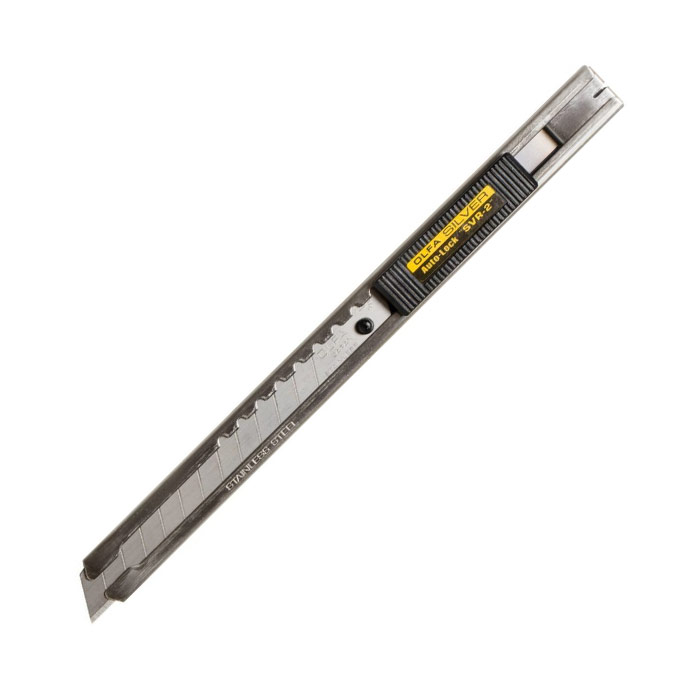
Olfa Knife
Comfortable metal handle with a break off blade. A tool for breaking off the blade is built into the handy pocket clip.
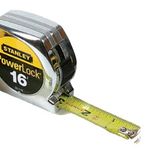
Stanley Powerlock 16-ft. tape measure
With its smooth lock, tough case, compact size, and excellent accuracy, this Stanley tape is perfect for workshop use.
Sign up for eletters today and get the latest techniques and how-to from Fine Woodworking, plus special offers.
Download FREE PDF
when you enter your email address below.


