

7 Habits of Highly Effective … Woodworkers?
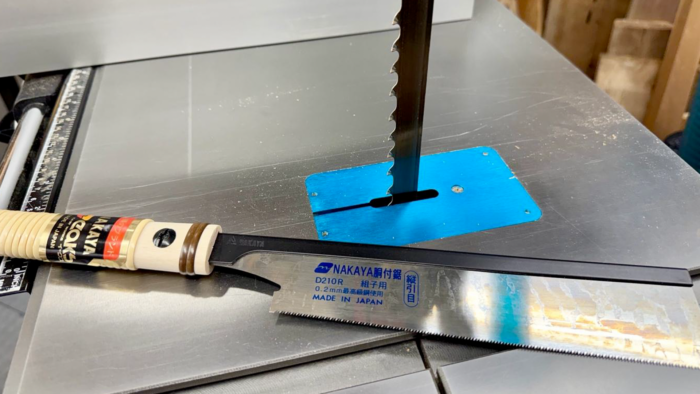
The average human gets 960 months to live. When you think about how long it takes to complete a piece of high-quality furniture, that’s not actually that long! How many of you have traded (or are considering trading) a professional life behind a desk so you can spend more time behind a bench? My guess is quite a lot, based on the conversations I have with woodworkers online and the percentage of my students who are from a background of knowledge work.
But as much as we might romanticize a life spent using our hands, the topic of what we can bring to that life from our prior career is something not often talked about. Are there things that we should be bringing with us from the office into the shop? And if you left the office life precisely to get away from some of this kind of thinking, bear with me.
In my opinion, the mentality within The 7 Habits of Highly Effective People by Stephen Covey applies strangely well to making sawdust. If you’re from a knowledge work background, you’ve probably heard of this book; it has sold over 40 million copies worldwide and is one of the most well-known business leadership books of the last 50 years.
I read this book early in my career, and the more time I spend in the shop, the more I’m seeing a connection between Covey’s ideas and what we do. Let’s take a look at how each of Covey’s seven habits can translate into helping you be the best woodworker you can be.
Habit 1: Be Proactive
You are responsible for your own choices and outcomes. Stop blaming circumstances, other people, or your environment.
In the shop: We all have a very finite amount of time in which to become the woodworkers we aspire to be, so owning our direction as makers and actively being in the driver’s seat of our own growth is essential if we want to make the most of that time. It can be worth pausing and giving some thought to the bigger questions:
- What are your goals as a woodworker?
- What defines success for you, and how will you know if you’ve achieved it?
These questions are hard but are worth spending time with so that you can consciously put yourself on a path to getting there. Once you have a sense of your vision and goals for yourself as a woodworker, try to turn that vision into a path. Define milestones that will keep you focused and always pushing yourself a little further. And remember along the way that it’s not just the path you own; it’s also your velocity down it. That means putting in the time behind the tools and prioritizing things that will accelerate your growth, such as education. When I was training in Japan, a head carpenter told me that if you’re passionate about something, you find an eighth day of the week to pursue it. For me, that looks like being in the shop at 6am most days of the week. It’s the highlight of my day, because that’s when the most progress happens.


Habit 2: Begin with the End in Mind
Know where you’re going before you start moving. Every decision should be made in service of a clear, defined outcome.
In the shop: Woodworking is mostly a ton of problem-solving sequences about how we can get the wood to do the thing we want it to do. The trick with any problem-solving is to define the result you’re trying to reach so you can work backwards from it. Designing a cabinet that you want to look clean and delicate on the face but still be strong? Now you can work backwards from that to interpret what joint might be most appropriate, such as mitered dovetails. That first choice then informs the whole build, helping to decide the orientation of boards, which faces become references, what order you mill in, and what gets cut early versus held for last. It also pays to slow down at this stage, because this is where mistakes cost the least. Erasing a pencil line is a lot cheaper than throwing away a board of English walnut. (Don’t ask me how I know.) Pause, define the problem, brainstorm viable options, test potential solutions, and repeat.
Habit 3: Put First Things First
Protect time for what matters most, not just what feels urgent. Discipline is choosing your priorities over your impulses.
In the shop: It can be tempting to drift from one activity to another when woodworking, but there’s a hidden cost to that if we don’t do so with intention. When we say yes to a way of spending our time, we are implicitly saying no to alternative ways we could be using it. Instead of sleepwalking into this habit, being selective about the projects you take on can help you accelerate your growth. Doing the low-stakes work that’s immediately in front of us, like shop organization and shop furniture, can be valuable if we need a little stress release (see habit 7), but there’s nothing quite like stepping out of our comfort zone and trying something new. I try to prioritize projects that push me creatively and technically—ideally both—each time.
This idea also applies when navigating the various options within a project. When weighing the different options for achieving the same goal (for example, cutting dovetails at the table saw, bandsaw, or by hand), we should consider the pros and cons of each and calibrate to what’s most important. Sometimes speed is the true necessity, in which case a machine-centric approach has a ton of value. But the opportunity cost in that scenario might be hand-tool skill growth. If growing the latter is key to ultimately achieving your goals as a woodworker, then it may be a good idea to say no to the machines, to focus on improving your own speed and accuracy.

Habit 4: Think Win-Win
There is enough to go around. Seek outcomes that genuinely benefit everyone, not just yourself.
In the shop: No maker is an island, and one of my favorite things about woodworking is the community. We’re all part of a bigger, dynamic thing that can be a source of inspiration, skill growth, and fun, and finding other woodworkers via social media, maker spaces, classes, and events can unlock new directions and solutions. But this goodness can only continue to exist if we all give as well as take. Whether that’s offering our time to someone less experienced to show them techniques, volunteering for causes bigger than ourselves such as Plane Wellness, or even just participating in thoughtful conversations on the craft, it all helps create value for others as well as ourselves. Taking this idea further, teaching has been even more of a win-win on my own journey. Nothing forces you to truly understand a technique like having to explain it to a student, and the skills you’re helping others to learn can have a butterfly effect through the woodworking community for years to come.


Finding local maker spaces such as LexArts in Lexington, MA can be a great way to connect with the community, volunteer and learn. You may also gain access to tools you don’t have in your own shop, so you can try them before you buy them yourself. Photo: LexArts.

Habit 5: Seek First to Understand, Then to Be Understood
Listen to comprehend, not to respond. You can’t communicate effectively until you’ve truly heard the other person.
In the shop: I like to think about woodworking as a conversation with wood. Much like a real conversation, if we just dive in and try to exert our will, bad things are likely going to happen. We get wood movement problems, tearout, and other mistakes that can be hard to recover from. And much like in the world outside of the shop, the solution is the same: slow down. Make it a habit to consider the wood’s perspective first, in terms of what direction the grain is running, which way the wood wants to move, and how you can accommodate that in your designs and processes. A few minutes to inspect a board before you cut it is cheap insurance against tearout, cupping down the line, or a set of joinery choices that can’t be rescued.
Habit 6: Synergize
The whole is greater than the sum of its parts. Genuine collaboration creates outcomes none of you could have reached alone.
In the shop: One way to look at this in woodworking is about how we bring together the elements of art and the principles of design, including space, color, and shape, along with proportion, emphasis, and balance. Take, for example, designing a cabinet. At first glance the requirements seem pretty simple: a carcass, a door, and maybe a couple of drawers. But how can you make it stand out? During the design process, it pays to sit with these ingredients and consider how you might incorporate them into a piece in an intentional and complementary way. Proportion is almost always a great place to start, in terms of the overall shape and how you divide up the spaces within it. You can then layer details on top, such as working in little insets and chamfers to add variety to the shape, and using texture, tone, and pattern to add further interest. Before you know it, these features will synergize into unity, and your piece will be unique.
Habit 7: Sharpen the Saw
You are your most important asset. Invest in your own renewal or you’ll grind yourself blunt.
In the shop: A theme of this article has been to always push yourself just a little further. But as we do that, it’s also important to acknowledge that such an approach can lead to burnout if we’re not careful. Rather than deal with the consequences of that after the fact, it can pay on a lot of levels to ensure that you are taking adequate breathers. This can be within the day, such as taking pauses even when you don’t feel you need them. It is codified in Japan with tea breaks: a way of stopping, resetting, bringing new perspective to a problem, and making sure you’re working safely and avoiding fatigue. It can be between projects: work on something purely conceptual, a new joinery technique, or some shop organization for a limited period of time, just to recover with some low-stress work. Pick up a pen and notepad and come up with ideas. And when inspiration strikes and you feel recharged, get back behind the tools.

So what should we bring with us from the office into the shop? Perhaps more than we might like to admit. The tools are different, but the fundamentals are uncannily similar: own your direction, know where you’re heading, protect what matters, give as well as take, listen first, bring the pieces together, and look after yourself along the way. Perhaps Covey was secretly a woodworker in his spare time like many of us, and we just never knew it.
Phil Evans spent years in technology at a desk before discovering that where he actually needed to be was behind a bench. Originally from the UK and now based in Boston, he studied carpentry and joinery in Japan, and through Namu Craft Studio he crafts furniture, boxes, and decorative pieces that draw on European, Japanese, and Korean design ideas. He teaches in Lexington, Mass., and writes about the surprising connections between knowledge work and craft. You can find him on Instagram at @namucraftstudio.


Fine Woodworking Recommended Products
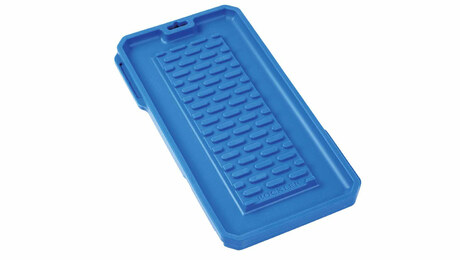
Rockler Silicone Sharpening Stone Tray
At 6 in. wide, with plenty of length for standard waterstones, they have grippy dimples that keep the stones stable and level, plus wide channels all around to catch the water. They also lock together, side by side, so I can have all of my stones available at the same time.

Wen Diamond Grinding Wheel
Diamond grinding wheel is perfect for flattening grinding wheels before honing chisels and plane blades
Sign up for eletters today and get the latest techniques and how-to from Fine Woodworking, plus special offers.


