

Tool Cabinet Tetris – FineWoodworking

This is part 3 of a three-part series. Click here to read parts 1 and 2.
While the first two entries in this series got pretty personal, what follows is a bit more technical. The tool case will always hold a special place for me emotionally, but it will also always hold my tools. After its temporary job as an emotional support project, it got a lifetime appointment as a tool cabinet, holding my most used and most beloved tools. I hope it is honored to have the job. It should be.
Let’s start with what I really like about this case: honestly, everything. It is a really great size for a small shop, and it holds a lot of tools. Several people I trust and respect advised against building a case with individual holders. In fact, that was the prevailing advice I found and heard. This perspective is that your woodworking will evolve and so will your tools. Fair points, for sure.
However, this cabinet holds the basics: bench planes, speciality planes, chisels, and measuring tools. For me, those are unlikely to change any time soon. I’ve been doing this long enough to know that I’m probably not going to swap out or upgrade any of these basics any time soon. That doesn’t mean I’m not going to acquire more tools (perish the thought!). It just means that I may need additional storage down the road. I’m OK with that. Though reasonably parsimonious, I’m not a thrifty woodworker.
The other argument I would make against those avoiding individual tool holders is that you can actually replace any of those tool holders over time. Admittedly, I paused while laying out the tools and where they would go. I wondered, Should I really commit to my 24-in. Starrett going here? Caught in the familiar process of letting overthinking delay progress, I realized that this is simply a slab door with a hardwood edge. With ten minutes and eight bucks, I could make a new one. Then I could spend a fun hour or two making new tool holders, laying them out, and reattaching them. It’s not rocket science or unreasonably expensive material. The same is true with the plane till; if I need to rearrange the planes or make room for new members of the team, I can just make a new till. No big deal.

The trade-off is that I really like having a specific home for each tool. I can’t say why exactly. I’m not an incredibly well-organized person generally. As I’ve gotten older, I’ve accepted this about myself while also trying to put systems in place to prevent my tendency toward disorganization to keep me from getting things done. When every tool has a place to live, you can look at the cabinet and immediately know if something is out of place. It also makes it more likely that I’ll clean up properly at the end of the day.
While the final project is great and I’m extremely happy with it, I really enjoyed the construction too. I used Mike Pekovich’s method for cutting dovetails on the table saw. I’ve cut thousands of dovetails and never used power tools. I rather enjoyed the change of pace. I was able to borrow the specialized blade from a friend and found the process really fun. It still includes plenty of handsawing and chiseling, so it’s not like you’re forsaking your hand tools while building their new home, which would feel weird.
I made a few modifications: I did not make drawers yet. I may at some point, but right now I’ve found that the drawer boxes are the perfect place for my HVAC and air-cleaner remotes. I also did not make a through-tenon for the shelf. Instead, I made a simple dado. My plan is to fill the exposed part of the dado with a small curved piece of matching wood some day when I have a spare hour. I also did not add tool holders to the small cabinet doors in the center of the case–I don’t need them yet. My saws also live in separate tills.

Pekovich notes in the video that the “fun part” is making the small tool holders. I chuckled when I first heard this, thinking, “This whole thing looks fun!” But he’s not wrong. Laying out the tools, seeing them neatly organized in their future homes, and playing around with different layouts was really fun. I particularly enjoyed making the small holders for my speciality saws. Layout for the planes was the most challenging and most fun. Fitting all of them in there and making them accessible was a great puzzle to solve. Which ones go in the bottom slots and which in the till? It was an oddly satisfying task to complete.
Another great feature, which was new to me, is the ability to keep all of the tools both behind closed doors AND easily accessible. My first tool case included open plane and saw tills and several ill-fitting drawers for various do-dads. The chisels hung on a ledge on the wall. Everything was relatively handy, but when I was doing a lot of power-tool work (especially the router, with its lousy dust collection), everything ended up covered in dust, including things in the drawers I would inevitably leave partially open. I can now simply close the doors and keep the dust off of my precious tools. After I’ve vacuumed, I simply open the doors back up and everything is easily accessible.
Finally, this cabinet really strikes the balance of being a nice piece of furniture while also fitting nicely into any shop. Typically “shop storage” is relegated to “quick-and-dirty” plywood cabinets; the point of the shop is to facilitate making furniture, and building fancy stuff for the shop may feel like a self-licking ice cream cone. Admittedly, this case could be modified in ways to make it more or less fancy depending on your time constraints, budget, and preferences. However, I subscribe to the notion that surrounding yourself with beautiful things promotes good work. In fact, some hand tools I own are as much inspiration for doing good work as they are inspiration for achieving great results.


From a business perspective, it’s rare that I have a piece of furniture available for customers or students to see in person. It helps to have a nice cabinet on hand that I built and people can see.
Things I don’t like or would change
Honestly, after four months of using the piece nearly every day, I can say there is nothing I would change. But as I described in earlier posts, this project was as much therapeutic as it was practical. I needed to do some pure woodworking: no customers, no margins, no timeline. That this project resulted from that need affected my appreciation of it—it was a salve. But objectively the cabinet is awesome. I enjoyed making it; I enjoy using it; other people like it. Win, win, win.


Fine Woodworking Recommended Products
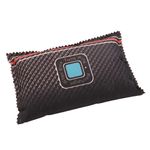
Woodriver Rechargeable Desiccant Bag
Placed in a drawer, cabinet or closet, the bag immediately begins to absorb moisture from the air, which reduces corrosion.
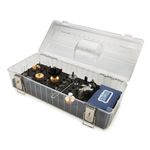
WoodRiver Router Bit Storage Case
Molded from high impact clear ABS, this WoodRiver case provides a strong storage solution to keep your router bits safe and dry.
Sign up for eletters today and get the latest techniques and how-to from Fine Woodworking, plus special offers.


