
Dedicated Workstations for Success – FineWoodworking

There are many ways to organize a shop, from one bench and a toolchest all the way to commercial organizing systems. Wherever you fit on that spectrum is influenced by the type of work you do, how fast you want to do it and whether you are woodworking commercially. I have found that one of the best ways to improve productivity and skill mastery is to organize the shop into dedicated workstations. I work as a luthier, building custom musical instruments as well as restorations. I use a series of dedicated workstations that allow me to produce over 50 custom instruments a year, from rough milling to final product. I must say, I am spoiled by the amount of shop space I have, with 1200 square feet plus a loft and a woodshed. I will try to give suggestions along the way for smaller shops so everyone can get something out of this list.
Sharpening
Quick and easy access to your sharpening setup is vital for productivity. I recommend a little cabinet, 2-ft by 2-ft that can hold your sharpening stones, a light, oil or water, paper towels and other sharpening accessories. If you don’t have room for this, consider keeping it on a tray that can slide on a shelf under the bench. It makes for easy access and collects the lubricants and mess. Since my shop space is large, I keep two other fine stones and strops in other locations for quick touchups.
Glue-Ups
I like gluing my work on a different bench than for woodworking. I keep this bench directly behind me, so I can just spin around and glue up when needed. Clamps are near at hand, hanging from the wall or rafters. In luthiery, I work with veneer and laminations quite a bit, which can get messy. I keep 3-ft by 3-ft pieces of melamine around to put under the messy glue ups, which protect my benches and its easily cleaned. If you don’t have much room, you can set a plank over sawhorses for glue ups. If you work with casework or chairs, you can set the height of the glue bench lower to accommodate this easily. Between these two benches, I can have multiple small projects going at once, which increases my output.

Rough Work
It is a good idea to keep tools for different categories of work together in their own area. For rough work, I do most of it outside, with a chainsaw, chop saw, wedges and froes. I keep these in my woodshed, so I can get the pieces cut to rough size before they come in the shop for further milling. All the tools to sharpen and work on my chainsaw are in one kit, stored next to the saw. My froes, wedges, mallet and green wood saw are kept in one box, so I can take it to the woods if needed. After the rough work, the wood hits a staging area right inside the shop door. This has my saw benches and my big bandsaw, which are likely to be the first stop for any piece of wood as it enters the shop. Since this is by the door, the waste is easily stacked outside for the wood stove with as little labor as possible.
Sanding and Routing
I use a series of routers in my work, especially for cutting the channels for decorative binding and inlay. All the routers have a dedicated bit and setting, so I rarely spend time to set them up. To collect all the chips and dust, I work over an inexpensive downdraft table which is connected to the dust collector. I also use my random orbiter sander here as well as most hand sanding. This dedicated station saves me time and keeps the shop cleaner.

Metalworking
I also work with brass, bone and plastic, which I want to keep separate from the woodshop. I have a little 10-ft by 10-ft add-on to the shop for this, which includes my torch for brazing, metal working tools, grinders and a sharpening station. This keeps wood chips from mingling with this waste and cuts down on fire hazards. In a smaller shop, this sort of work can be relegated to a corner far from your bench.
A Clean Room
The front room of my shop is where I do the final work on musical instruments, repairs and restorations. I also meet with clients, write and do administrative tasks. It is separated from the woodshop, which helps keep the room a little cleaner. It is far enough from the other bench and the sharpening station that I have doubles of many hand tools in this room as well as a mini sharpening setup. This keeps me from pacing all around the shop looking for things and wasting time. Maybe a small lean-to added to your shop or a spare room inside the house could serve the same purpose for you.
A Digital Space
A portion of my workday is dedicated the digital world, like zoom calls, interviews, live streams, podcasts, photos and videos. The end of the clean room has a bench that is used for arts and crafts, but also doubles as a backdrop or studio for this work. I have some appropriate lighting and a stand for my phone, which seems to be enough.

Other Specialty Stations
There are a few other special operations that I do frequently enough to warrant their own station. For instance, I do some glueing jobs in a “go-bar” deck, which uses kite rods to put clamping pressure on shapes that are difficult to clamp otherwise. I dedicate a bench to hold this deck, as well as a series of chisels, saws, a plane, a bench hook and a glue bottle that never leave this spot. I can brace all the musical instrument tops and backs here without having to prowl the shop looking for the right tool.

These dedicated workstations save me time by reducing the amount of setup and teardown. They also keep my main bench free, so I can have more projects in progress at a time. The main downside is that it requires more space than many hobby woodworkers have. It also can cost more money, as I have doubles of certain tools around the shop as well as more glue bottles, paper towels, etc. Hopefully you can apply these ideas to your own work and do your own math about time, space, money and efficiency. You won’t regret it.

Fine Woodworking Recommended Products
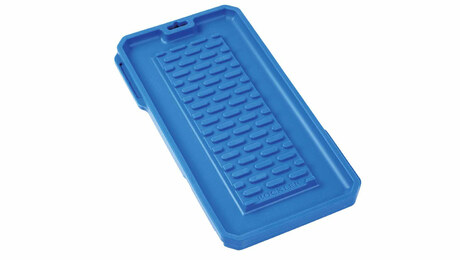
Rockler Silicone Sharpening Stone Tray
At 6 in. wide, with plenty of length for standard waterstones, they have grippy dimples that keep the stones stable and level, plus wide channels all around to catch the water. They also lock together, side by side, so I can have all of my stones available at the same time.

Honing Compound
This honing compound is great for loading into a buffing wheel and polishing an assortment of metals.

Wen Diamond Grinding Wheel
Diamond grinding wheel is perfect for flattening grinding wheels before honing chisels and plane blades
Sign up for eletters today and get the latest techniques and how-to from Fine Woodworking, plus special offers.


