
From the Archives: Greene and Greene Style and History
This is an excerpt from Fine Woodworking #12, Fall 1978
Click here to read the full digitized issue.

It took more than 40 years for American designers and architects to finally recognize the significance of Charles and Henry Greene. In 1952, the American Institute of Architects called them the “formulators of a new and native architecture,” an honor bestowed on them both individually and for their work together. Another 25 years elapsed before the first major public showing of their furniture and furnishings.
The Greene brothers distinguished themselves as architects by building essentially wooden structures at a time (around 1900), in a place (the western states), and on a scale (residential) that made their construction both practical and economically feasible. The Greenes melded the design principles of their various influences-the Arts and Crafts movement, Japanese art, English country houses, to mention only a few-into a style that remains widely acclaimed.
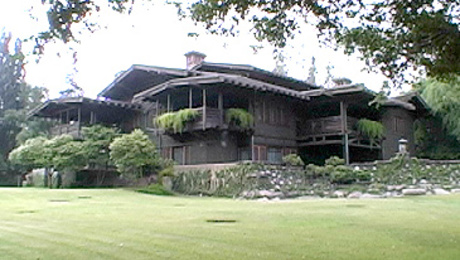
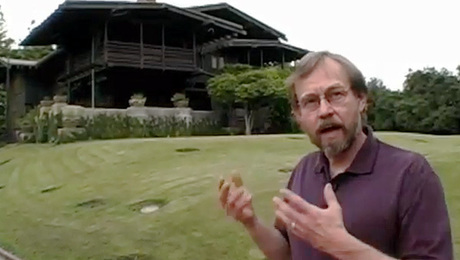
The David R. Gamble house in Pasadena, Calif., designed and entirely furnished by the Greene brothers in 1908, stands open to the public today, a permanent monument to their design philosophy. The curator of the Gamble house, Randell L. Makinson, and the curator of the Los Angeles Municipal Art Gallery, Virginia Kazor, collaborated on an exhibition of the Greene brothers’ furniture and furnishings in Los Angeles in 1977. More than 40 pieces of furniture from collections around the country were displayed, in addition to paintings, architectural drawings and renderings, lanterns and light fixtures, wrought iron, leaded glass, hardware, and even a living-room carpet, also designed by the Greenes.

Prior to their formal architectural education at Massachusetts Institute of Technology (1888–1891), Charles and Henry Greene attended Calvin Woodward’s Manual Training High School in St. Louis. There, in addition to studying academic subjects, they were required to spend two hours a day in the shop. The first year exposed them to woodworking and carpentry with an emphasis on understanding the characteristics of wood. The second year, they were taught metalworking, and the third, toolmaking. Little of the work shown on these pages is theirs, however, with the exception of isolated carving and inlay work by Charles Greene. The Greene brothers were primarily designers, with Charles responsible for most of the furniture and fixtures. To supervise construction of furniture, they employed two brothers, John and Peter Hall, whose family had moved to the United States from Sweden while the brothers were young.
John and Peter inherited their professional skills and knowledge from their father, a cabinetmaker. In fact, many of the techniques used by the craftsmen they employed in their Pasadena shop and mill reflected traditional Swedish practices. It may be assumed that much of the knowledge Charles Greene acquired about furniture joinery came from his intimate association with John and Peter Hall.
Close scrutiny of the furniture reveals Charles Greene’s approach and consideration for the wood. He appears, for example, to have designed and built the game-room armchair from the Fleishhacker house around the rare, striated piece of mahogany from which the back slats were cut. Its curved and rippled surface also inspired the curved back legs and carving details. Some of the sparse carving and inlay work on various cabinet doors and chair legs appears to be his inspiration.

On furniture for the Blacker house (1907), delicate carving on leg bottoms gives a streamlined, sculpted effect through the smallest of means; the cut deepens downward, defining a new, inward-sloping plane within its boundaries. It also punctuates the meeting of the legs with the floor and enhances their upward sweep.

Though defining a Greene and Greene design philosophy is difficult, superb craftsmanship and attention to detail run like a thread through their work. The Greene and Greene approach is not always “honest.” That is to say, the architects were capable of misrepresenting construction, often implying joints that do not exist. Massive timbers were employed out of proportion to the weight they bear, and beams sometimes serve no other purpose than to decorate. Square, highly polished ebony plugs might cover the screws that secure tenons, but half of them could as well be decoration. Or the joints could be doweled entirely with plugs masquerading as functional, as on a chair I examined. Screws made good sense in a period when the brittle organic glue used made any joint, even the most carefully fitted, subject to cracking under stress and changes in humidity. Though modern glues lessen the chance of this happening, using screws still has its “strong” points today. Plugs restrict design possibilities of course, but the Greenes embraced this limitation. They used plugs as accents to set off the spartan qualities of their work.
The most cohesive aspect of their work is design: Their houses are entities complete unto themselves. Furniture, landscaping, fixtures, masonry, door handles, fire screens all reflect the same theme. In the words of Charles Greene, “Thus it may be seen that in a work of art as in a piece of tapestry, the same thread runs through the web, but goes to make up different figures. The idea is deeply theosophic, one life, many manifestations; hence, inevitably, echoes, resemblances-consonance.”
The Greene brothers’ work differs from the conventional architecture of their time. Deeply influenced as they were by the Arts and Crafts movement, they eschewed ornamentation for its own sake and to hide construction. Other influences, such as Charles’ love of Japanese art, were shared by many of their era. But Louis Sullivan built in steel and concrete, Frank Lloyd Wright added glass to his palette, and William Morris preferred brick, while the Greenes timbered their framed structures with redwood and Douglas fir. After experimenting with woods indigenous to the United States, for the most part California, the brothers imported ebony, teak, and mahogany. Two of their affluent clients were lumber merchants and no doubt the Greenes were given the run of their mills at favorable prices.
The phrase “spartan elegance” only partly describes their special flair. Throughout the detailing may be felt Charles Greene’s impeccable touch, his preoccupation with “threes” or “trines,” the small accents. Their work hasn’t any curves to speak of and it stands as a study in strictly proportioned rectilinear length, depth, and width. The native California oak tree, which appears in their inlay, stained glass, and carving, symbolized organic life. This oak grows in a gnarled, angular fashion, a grotesque, weathered tree that could as soon grow horizontally or downward as upward. No graceful curves here. The furniture impresses us most with its decorative austerity or its simple elegance, but only rarely with its grace. It is as if the furniture itself echoes the oak’s strange, fascinating disjointedness.

Because edges, joints, and pegs are rounded, the rectangularity of the design appears less sharp and disconcerting, more friendly to eye and hand. Ends of beams and other projecting pieces were first rounded with a shaper and then the corners of the ends were rounded to an even greater radius. As a result, the furniture and interiors have the worn look wooden objects acquire when used and fingered daily.
Designing with projecting or overhanging elements has a distinct advantage besides the aesthetic one; it eliminates the precision fitting required when pieces are joined flush. Two pieces joined on a piece of Greene furniture rarely meet on the same level. This has a decorative function but also requires less accurate work. Two pieces that are joined at right angles on the same plane are often rounded at their junction as, for example, on the Blacker house armchair, where the arms join the rear legs. This emphasizes their separateness, provides a dark shadow line and, once again, minimizes the effect of pieces out of square, differences in level, etc.

Placement of the lower rails used to strengthen chair or table legs largely determines the piece’s “gesticulation,” and generally speaking, the Greene furniture has these bracing members placed low. Thus the pieces are visually anchored to the floor and the decisive upward rise of the legs is broken only by the intersection of a seat or tabletop. This kind of framework gives the illusion of a sturdy rectangle, but bracing placed higher up strengthens more. The Greenes used such wide seat rails, however, that low placement of the bottom rails hardly weakens the structure.
The subtle upward taper of the legs of certain pieces of furniture is apparent only after careful examination, as on the sketch for the Gamble house chiffonier. One can only assume the purpose to be subliminal. We sense that weight is being supported but do not perceive it directly. The downward thickening of the legs implies this weight.

Construction of the living-room armchair from the Blacker house is out of the ordinary. Normal armchair assembly necessitates that the front and back units be assembled and glued together independently, then joined by seat rails and stretchers. Arms generally go on last and can be attached to the rear legs in one of three ways. Doweling through the corner is strongest because it provides the most glue surface and because the dowels would sooner break than pull out. In-line doweling comes next in strength, and also lends itself to mortise and tenon construction. Side doweling, the weakest of the three, permits a graceful design and gives more room for shifting one’s back. However, if someone should sit on the arm, dowels might snap or the arm might split along its grain.

The Greene and Greene adaptation of these joints is a glue, screw, and plug version. For in-line doweling, they presumably tenoned the arm and pinned it with a screw hidden beneath an ebony plug. For a corner dowel, they screwed into the arm. This could, if it utilized an optimum length and gauge screw, eliminate all of the above objections to this construction. But following normal assembly sequence, it could be exceedingly difficult to get a screwdriver in the space be between the leg and slats. The Blacker house chair is unique because its builder glued together only part of the rear leg assembly and left the final gluing of the top piece and slat assembly until last. The partially assembled back was connected with stretchers to the fully assembled front. Then the arms were fitted, screwed in place, and plugged. The final step was fitting and securing the slat assembly and top rail.
Several aspects of their table construction deserve attention. The majority of Greene tabletops and desk tops are solid wood. Others were veneered but only when the design required it, such as those with simple marquetry or inlay. Others are edged with massive hexagonal or otherwise polygonal bandings. Of the rectangular, solid wood ones, all have banding tongue-and-grooved across the end grain to prevent warping. They are secured with screws, not glued. Expansion and contraction of the top is accommodated in a fully satisfactory way. Bandings were drilled with spaced, oversized holes for the screws. Rectangular mortises were chiseled to a depth of about ⅜ in. and fitted with slotted washers. Screws biting tightly into the tenon secure the banding and slide back and forth in their washers as humidity changes. The banding overlaps the tabletop and movement of the two pieces relative to each other is unnoticeable. Ebony plugs are glued into the tabletop, but float in special mortises in the bandings.

Henry Greene gets credit for some straightforward solutions to table extension problems in the dining table from the Richardson house. Leaves folding beneath the table, out of the way, are no innovation, but two details deserve attention. His supporting sliders do double duty as notched holders for the tucked-under leaves. The ganged hinges are oriented to reveal only the round barrel when the leaf is folded under.

The hinge barrels would obstruct the action of the sliders, unless one cleverly formed the sliders to drop down slightly to clear the hinge barrel as they pull out, then come up to provide support. A short notch cut in the top of the slider provides clearance during the last inch or so of its extension, when it comes up to full supporting level.
The Greene and Greene gate-leg table offers a most congenial solution to the problem of enabling leaves to fold down against the legs without having to employ a notched stretcher. Such a stretcher would make impossible a refined, slender construction of the undercarriage. Here, the stretcher and the upper rail have a dog-legged curve to accommodate the supporting leg of the gate. Not only is this a clever solution, but also one quite in keeping with the style of the rest of the table-the series of three steps on the lower gate-leg stretcher, the steps of the side rails and those on the folding leaves. The two lengthwise stretchers bracing the undercarriage are retracted to provide ample room for legs and feet. The lower pivot of the gate leg attaches where the stretchers meet, and it would seem that the dowel that pins these stretchers also forms the pivot. The dog-legged top rails are composed of two separate, lapped pieces of mahogany. This construction saves work and wood, and circumvents the need to find and desecrate a prime 6-in.-sq. mahogany beam.

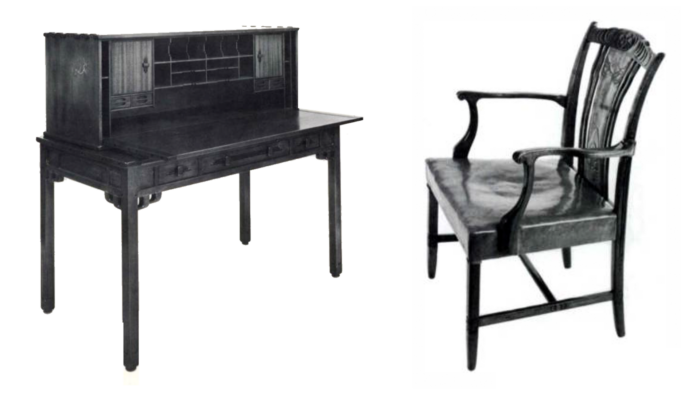
The Greenes used a number of techniques for supporting the fold-down lids of their writing desks. The Blacker house writing desk (1907), shown open on the magazine cover, contains two separate units, a lidded cabinet and the table to which it is fastened. Its lid folds down to rest on the center portions of two decorative bosses, which feature a piece of thick leather partly inlaid into the wood. On another desk from a Gamble house bedroom (not shown), opening the lid actuates levers that slide out two supporting arms beneath it as it is lowered. They retract flush when it is closed.
A third approach is to have a drawer slide out as support, as on the ash desk from the Tichenor house (1904). This piece was done the year before the association with Swedish cabinetmakers John and Peter Hall.

The Greenes had experimented with a host of different woods, among them oak, fir, redwood, cedar, and, in this instance, ash. As a result of the Halls’ influence, no doubt, they turned from native woods to mahogany, both Honduran and Cuban. Mahogany is a cabinetmaker’s delight. It contains few if any knots or imperfections; it stains easily, has unobtrusive (some might say boring) grain structure, and is available in large dimensions. It is interesting to note the contrast in style between this piece of furniture and what succeeded it. Its edges and corners are left sharp. The wood is light in color. Whether it is dowel ends or the ends of plugs protruding is hard to say, but they are round as compared to the later square or rectangular ebony plugs. Surfaces of the drawer handles were left flat and are unappealing to touch.

The overall gesture of the piece is upwards, whereas later cabinets are horizontal. Door panels are heavily battened and the amount of battening is hardly justified, except as decoration. One might term this a “rustic” piece. Rusticity appears to go hand in hand with an obvious construction, appropriate in function, yet overdone in the size and/ or number of reinforcing elements. This construction emphasizes sturdiness and possesses a charming, decorative awkwardness.
The piece is designed around an “I” motif. Several groups consist of verticals sandwiched by two horizontals, or the opposite, a horizontal bookended by two verticals, and this gives cohesion to the piece as a composition. Even the reversed-bevel block-wedged scarves joining the planks that make up the cabinet sides echo this theme. Two seemingly superfluous elements adorn each side, and these narrow verticals, topped by the small, U-shaped blocks into which they fit, appear inset as mere ornamentation. Actually, only the front pair deserve this label. The rear two hinge in their blocks and swing upward, revealing through mortises. At the same time they expose the end of a board that serves as a false back for the pigeonholes. When it is slid through either one of the mortises, a secret storage space becomes accessible.
Another construction detail left out of later designs is the method of concealing mortises for the bottom and drawer partitions. Stylistically, these overlaps give the drawer and bottom sections an existence independent of the vertical sides with their stepped, retreating rise, and they tie in with the horizontal batten in the desk lid.

The Blacker house writing desk is typical of later work. Here are the rounded edges and flattened corners, the ebony pegs and the refined construction typical of all work done under the Halls’ aegis. This piece features frame-and-panel construction in table sides, bottom, and to the left and right of the drawer section. The tabletop is screwed fast to the carcase along sides, front and back. Presumably the screws repose in slotted holes to allow for movement, as do the screws that fasten the breadboard ends. Each drawer slides on two frame members into which are mortised bottom panels and drawer partitions. The smaller drawers are guided by a central track of oak, and the middle drawer runs on two oak tracks. Having no doubt observed how the weight of a drawer as it is pulled out causes it to glide on the upper rear portions of the sides and on the bottom, the designer felt safe in step ping the upper sides in the middle to reflect the steps of the ornamental leg braces, the door bosses, the ebony drawer front decoration, and the upper cabinet top joints.


The latter overlap and their pinning screws are hidden by ebony pegs. Details of hidden carcase construction will remain a matter of guesswork until the joints separate with age and under use, but this does not appear imminent. It is impossible to determine for certain how the legs were fastened to the framework, but it seems probable that after the central drawer section was completed, the end leg and panel assemblies were doweled into it and glued. In any case, the table top was screwed on last.
Drawer fronts were joined using half-blind tongue and rabbet construction, not a particularly strong one, but here justified because it permits an overhanging front. With the sides in effect drawn in, there can be no friction with the frame and as a result, the drawers glide well.
One of the nicer features of these later cabinets is the attention given to parts not ordinarily seen, such as backs, which were as nicely finished as fronts; bottoms, which were paneled as noted; and insides, not neglected, but instead well sanded with edges adequately broken.
Original specifications for the fine interior finish work in the Gamble house give us some idea of how the furniture was treated. Instructions mention four steps. First the wood was treated chemically in two coats. When thoroughly dry it was to be sanded lightly with 00 sandpaper. The chemicals were not named, but were probably a bleaching agent such as oxalic acid followed by wiping with acetic acid. Second, the wood was to be filled and stained. When the stain had set, it was to be wiped with cheesecloth and rubbed smooth. After drying, it was again sanded. After 48 hours, a coat of pure, undiluted boiled linseed oil was brushed on (step three) then wiped off until the surface was dry. It was then polished briskly with woolen cloths to a uniform surface, creating great friction and heat. Finally, when the work was approved by. the architect, it was treated again with linseed oil, wiped, and polished.
Fine Woodworking Recommended Products
Stanley Powerlock 16-ft. tape measure
With its smooth lock, tough case, compact size, and excellent accuracy, this Stanley tape is perfect for workshop use.
Blackwing Pencils
If you’ve listened to Shop Talk Live, you’ve heard them talk more about these pencils than you could possibly imagine.
Drafting Tools
Add a hole guide to this kit, and you’ll have the tools you need to work out your designs with scale drawings.
Sign up for eletters today and get the latest techniques and how-to from Fine Woodworking, plus special offers.


